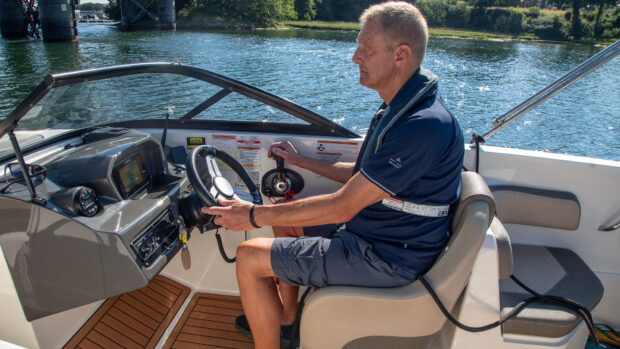


Having familiarised yourself with your new boat while still on its berth, the next stage will be getting to grips with low- speed handling. In its simplest form boating requires three manoeuvres: unberthing it from where you start, turning it round so you can return, and re-berthing it. Practising is the key to getting all of these procedures right.
All boating manoeuvres are influenced to some extent by the wind and water flow – be that tidal or river stream. In almost every case it’s easier if you can do them against the direction of water flow. It’s the same for the wind – even a short gust can push a small boat off course so, if possible, manoeuvre against the wind. Learning to read these elements is crucial.
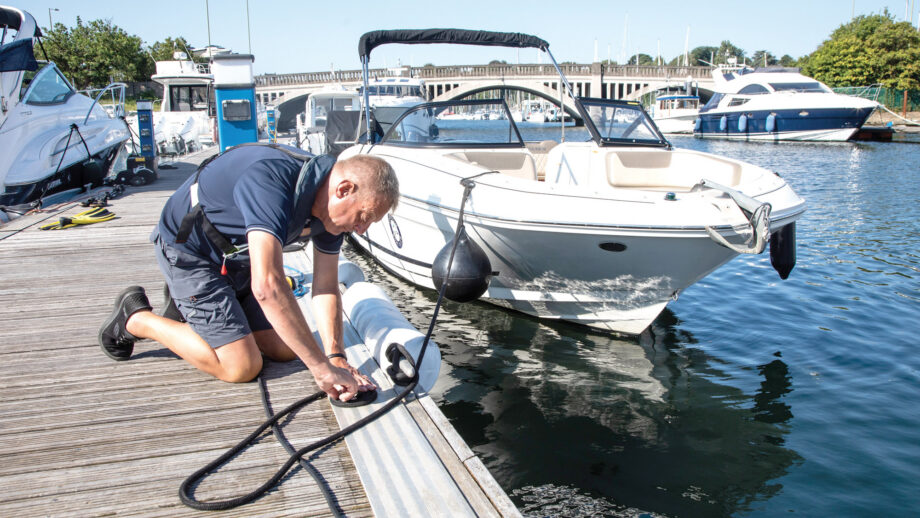
For berthing manoeuvres, I like to keep the mooring lines as simple as possible. For that reason, I favour a single centre line fixed to a midship cleat (or any other strong point).
This can then be looped around a bollard or cleat on the dock and secured back to the same point on the boat so you can release it from on board. I always try to use this as the first line ashore when arriving and the last line off when leaving.
Before that first unberthing manoeuvre, take a moment to assess the wind and tide, and if possible, try to leave against the stronger of the two. Now remove all lines other than the central one in preparation, engage ahead or astern as required, and slip the centre line as you leave.
Berthing on your return will also be much easier into the elements. Once again, aim to get that centre line ashore first. By all means have bow and stern lines ready too, but if you aim to stop alongside a mid-ship cleat then the whole affair becomes much easier as it’s all within easy reach of the helm.
When turning the boat round at slow speed it’s always best to start in neutral, then turn the wheel in the direction you wish to go before engaging gear. This saves valuable space and avoids building up too much momentum.
Again, if possible, start any turn into the elements as they will provide resistance to the boat’s speed. Practise in a large space where you can perform a turn using just the helm. Then choose somewhere tighter where you’ll need to do a three-point turn. Try to use all the space, while allowing time for neutral and the change of helm and gear.
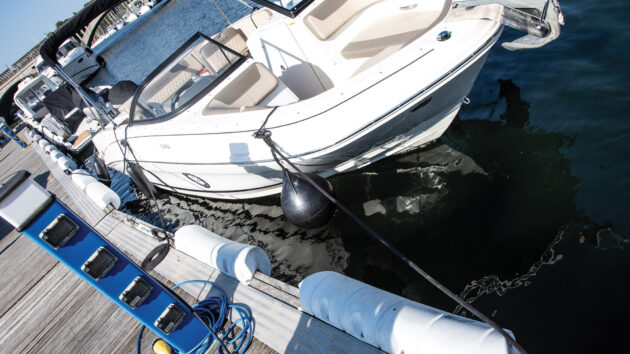
Assess the set-up
Before you undo any lines, check which ones are taut. Here the taut bow line tells me the boat is pointing into the water flow and the wind is blowing it gently away from the dock. The best plan is to leave forwards.
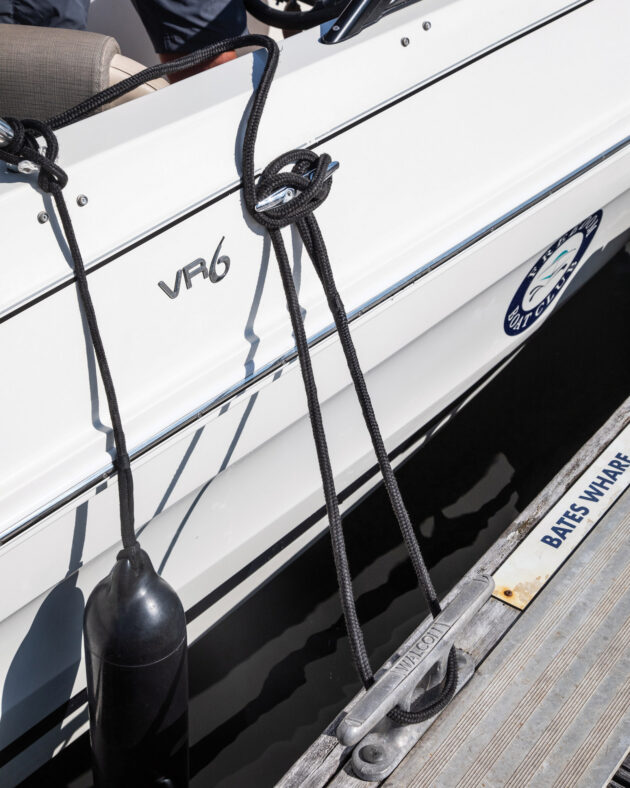
Releasing lines
Before removing the bow and stern lines, I’ve set a simple centre line looped around a cleat or bollard on the dock so I can slip it from on board. Once set, I can release the bow and stern lines knowing it will hold me until I’m ready to leave.
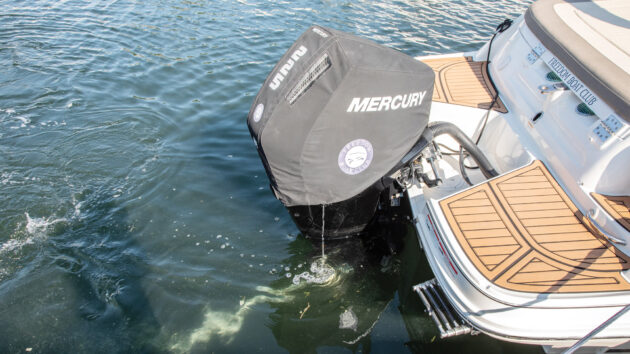
Leaving the berth
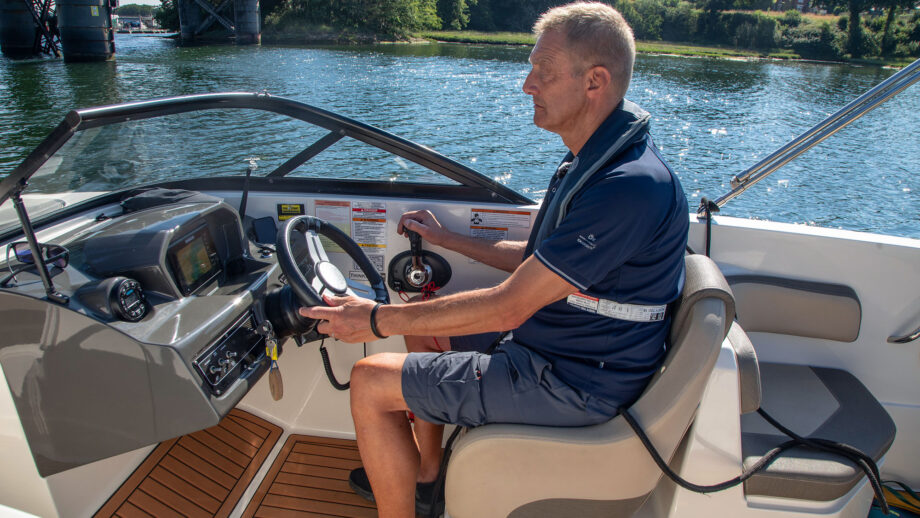
When I undo the centre line the wind will push the bow out and in theory I can drive straight out. However, by angling the helm slightly towards the dock that first click will help bring the stern out away from the dock as well.
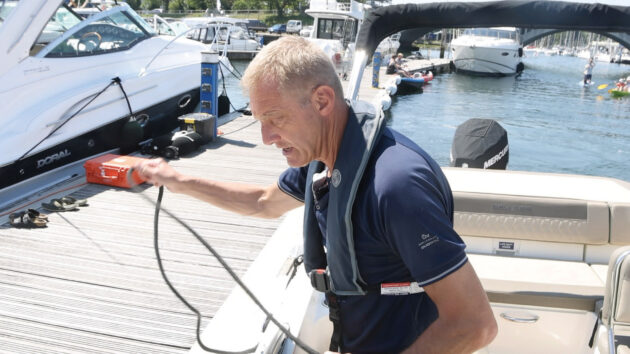
Returning to the berth
When returning, I have the fenders all ready and I’m aiming to stop the boat alongside the cleat right next to me, so all I have to do is place the line over it, secure it back onboard and we are safe.
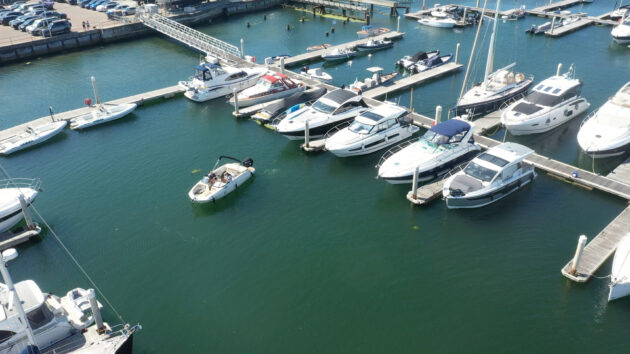
Turning round
Turning in a restricted space at slow speed is much easier if you start with the boat pretty much stationary. Then turn the wheel in the direction you want to go before engaging the gear.
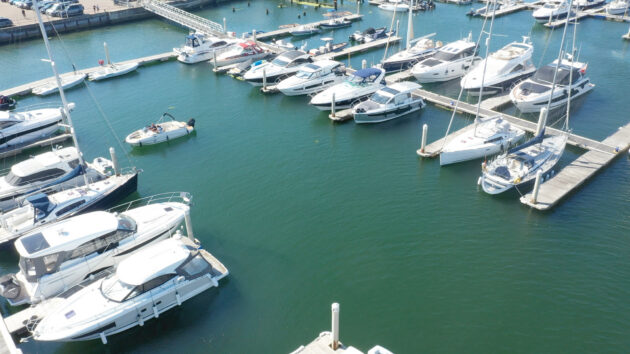
Keep it slow
Never let momentum build, especially if space is tight. Stay calm, go back to neutral, reverse the helm and engage astern. You can do this as many times as needed to make the turn fit.
Want to buy a motor boat? Here’s what you need to know before you get started
 If you enjoyed this….
 If you enjoyed this….
Motor Boat & Yachting is the world’s leading magazine for Motoryacht enthusiasts. Every month we have inspirational adventures and practical features to help you realise your sailing dreams, as well as tests and news of all the latest motorboats.
Plus you’ll get our quarterly Custom Yachting supplement where we share the last on offer in the superyacht world and at the luxury end of the market.
Build your knowledge with a subscription delivered to your door. See our latest offers and save at least 30% off the cover price.
Note: We may earn a commission when you buy through links on our site, at no extra cost to you. This doesn’t affect our editorial independence.