
Lithium, boat batteries are evolving. We take a look at how to navigate the benefits, safety, and tech of modern marine power
Boat batteries have changed over the years. While most of us grew up on a diet of heavyweight lead acid batteries, the likes of which are still commonly used as starter batteries today, these have increasingly been replaced by maintenance-free AGM and gel variants and, in the last ten years, by lithium boat batteries.
Given their natural advantages – lighter weight, higher energy density, deeper discharge, faster charging and longer life – that’s only to be expected. But as lithium battery banks have continued to find their way into homes, cars, campervans and boats in ever greater numbers and for ever more demanding loads, it’s important to understand their merits, their limitations and the continually evolving picture in relation to their proper management.
What is a lithium battery?
“Lithium-ion” is an umbrella term for any rechargeable battery that carries a charge via lithium ions as part of its cells’ electrochemical function. There are various chemistry types available and each comes with its own characteristics and applications. NMC (Lithium Nickel Manganese Cobalt Oxide) is often used for electric cars; NCA (Lithium Nickel Cobalt Aluminum Oxide) is popular for e-bikes; and at the smaller end of the scale, LCO (Lithium Cobalt Oxide) batteries have become critical assets for portable tech, powering everything from laptops and mobile phones to handheld GPS and VHF units.
But with its capacity for thousands of repeated cycles, its proven stability, its high safety standards and its modest pricing, Lithium Iron Phosphate (LiFePO₄ – often interchangeable in marketing terms with LiFeSO₄) is the go-to lithium variant for boats.
lithium, boat batteries are evolving. Discover how to navigate the benefits, safety, and tech of modern marine power
The basic elements of a lithium iron phosphate battery for marine leisure are quite simple. They use 3.2V prismatic (rectangular rather than cylindrical) cells for increased space efficiency. There are four of these prismatic cells (or in larger batteries, sometimes eight) inside a single battery box.
These batteries are used either individually or in a cluster and equipped with a Battery Management System (BMS), which is designed to maintain their stability and maximise their long-term effectiveness by, among other things, detecting the voltage, monitoring the temperature and controlling the rate of charge and discharge.
How do lithium batteries actually work?
Each cell contains a cathode (the positive electrode), on which a layer of paste contains the active cell chemistry that defines the battery type; opposite this is an anode (the negative electrode), which hosts a layer of carbon particles; and between the two is a separator, which guards against short circuit but remains permeable to ions.
All three are immersed in an electrolyte (usually a liquid or gel), which enables the movement of charged ions through the separator and between the two plates. When you charge the cell, charged ions move from the cathode to the anode; and when you discharge the cell, the direction of the ions reverses. While the inherently unstable chemical reaction that enables this movement produces heat as well as energy, that instability is mitigated by means of a passive coating of lithium salts on the carbon particles in the anode region known as the solid electrolyte interface (SEI).
Lithium Iron Phosphate provides between three and five times the energy density of lead acid, which means you can use much smaller, lighter, more compact battery banks to achieve the same capacity. Installed and managed properly, they will also last much longer than lead acid (in excess of ten years) and they’re also more user-friendly.
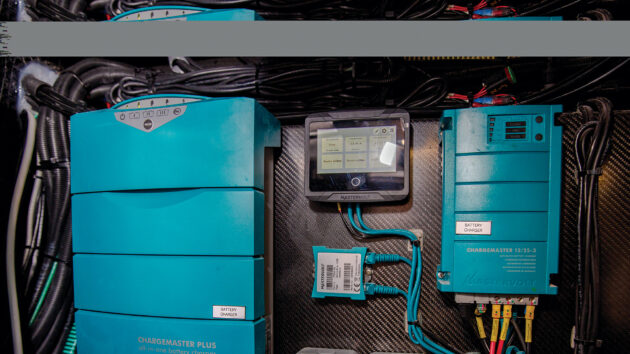
It’s vital to understand that a lithium battery bank is only as good as the components that protect and charge it
You can discharge them to a far greater degree and you can do that far more frequently than you can a traditional lead acid battery. As a rule of thumb, if you discharge lead acid to more than 50%, you won’t be able to do it more than 100 times. A decent AGM battery might enable that 400 times and a gel battery around 800 times. But a healthy lithium battery will happily do that 3,500 times, which is every single day for at least a decade.
They are also much faster charging; they retain far more of their charge while sitting idle for long periods; and while they are still more expensive, due in part to the additional protection and management components that modern batteries now use, they are (like-for-like) around 75% less expensive than when they first entered the market just over a decade ago.
Is the quality variable?
Yes, very. There are now lots of manufacturers in China and Vietnam that manufacture lithium cells but they’re by no means always identical, either from manufacturer to manufacturer or even amongst a single batch from an individual production line. To express that quality differential, the cells are graded A, B or C.
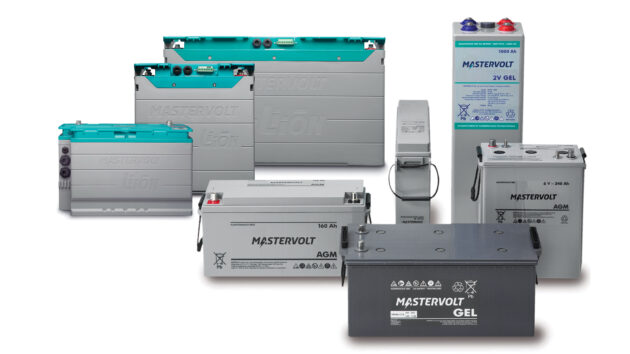
However, a great many ‘manufacturers’ are in fact assemblers, which means they buy the components and put them together, before branding and exporting them, so tracing and verifying the quality of the parts can be even more difficult. But while cheaper brands will buy Grade B or C cells, the best brands (like Victron and Mastervolt) insist upon the best Grade A cells for improved long-term performance.
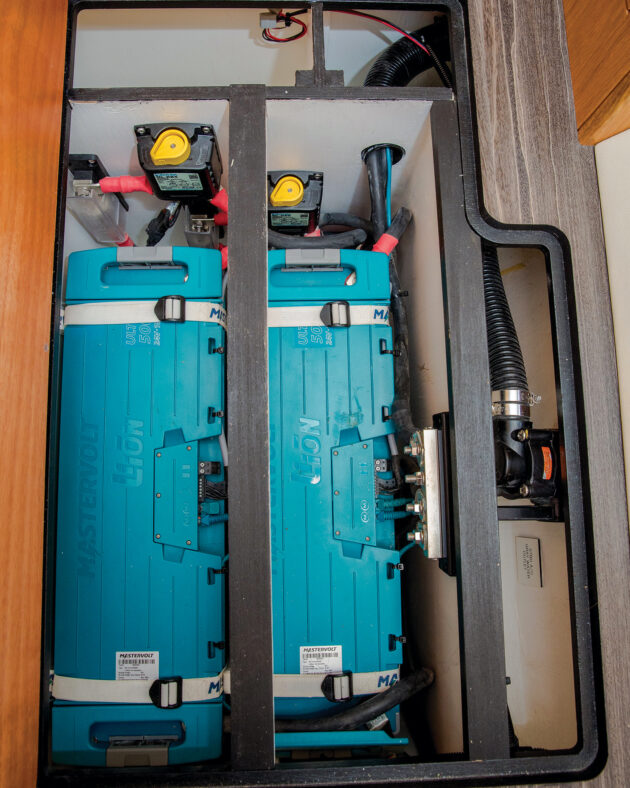
Energy density four times higher than lead acid means even compact lithium banks can handle extremely demanding loads
But what does quality really mean?
Quality in the lithium battery world means Grade-A cells from established manufacturers with precise and consistent manufacturing standards that enable battery packs to meet or exceed specifications regarding energy density and internal resistance. Cells should be as similar as possible across a batch, which is critical for balanced, efficient and long-lasting performance, because it enables easier cell balancing with less heat generation, enabling them to live up to manufacturer claims regarding charge and discharge cycles.
Quality cells will also lose very little capacity while sitting idle; and as regards safety, they will have been tested for stability at higher temperatures without swelling, leaking or risk of fire, achieving UL (Underwriters Laboratories) listing standards for finished products and UL recognition for components. Critically though, however high-quality and well-matched the cells might be, a lithium battery is only as good as the components that protect and charge it. That’s why Mastervolt makes its own BMS units, while also operating a facility in China to directly oversee standards.
It even has a facility in Holland that enables it to test each cell and match them for capacity and voltage so that the cells in any given Mastervolt battery are all but identical.
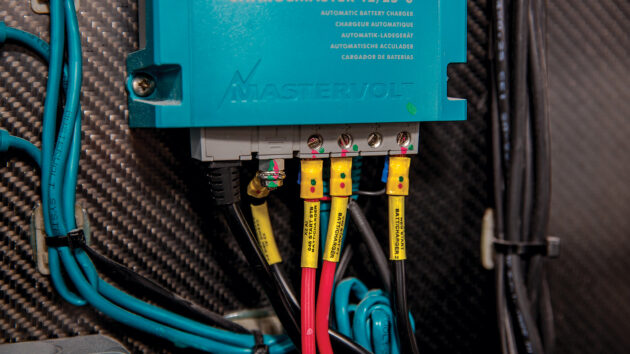
Installation by a specialist, specifically approved by the equipment provider, is vital
Are there any guarantees?
Given that nearly all lithium cell production (and most associated componentry) takes place in the Far East, production and safety standards are tough to verify. Even a highly reputed supplier’s claim of 5,000 cycles will not have been formally confirmed because it would take too long to achieve that. As things stand, 2,500 to 4,000 cycles at 80% depth of discharge (DoD) remains pretty commonplace but quoted warranties should be treated with lots of caution, particularly as they are likely to involve stipulations about how the battery has been charged and discharged.
The government is looking into safety in use, safety in transport and credibility of performance claims, covering related issues like capacity, labelling and chemistry. But in spite of the industry’s exponential growth in the last decade, there are still no internationally ratified standards for battery production, so it’s vital to source your equipment from a recognised, established and reputable brand.
Do you really need lithium batteries?
No, not necessarily. If you tend to have access to shore power and you’re happy to use a generator at anchor, a good bank of AGM batteries remains an excellent solution. They are maintenance-free, spill-proof and significantly cheaper than a lithium battery bank but they still shouldn’t be discharged below 50%.
On the other hand, there’s a definite place for lithium on yachts that cruise extensively and don’t tie up in marinas every night, because you can save a bit of weight and discharge them to a greater degree, substantially increasing your off-grid autonomy.
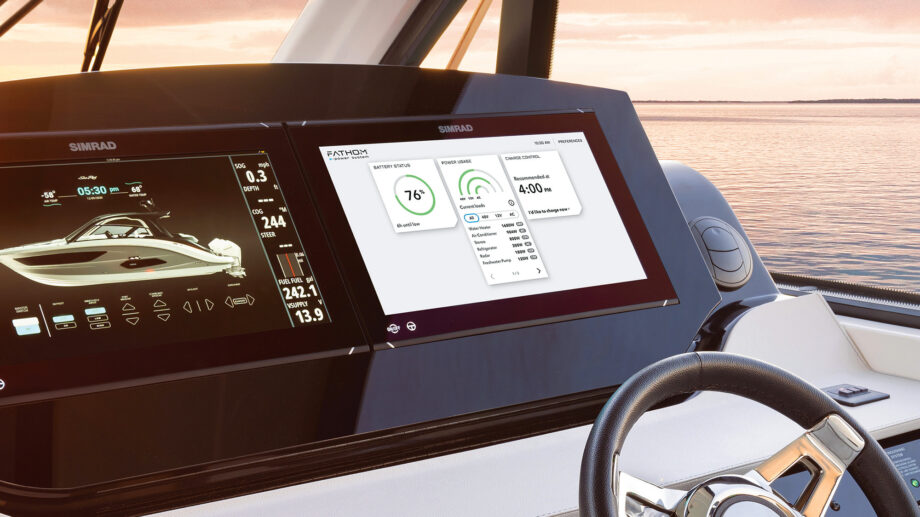
It’s quite natural then that, just as we now see lithium battery banks providing the propulsive energy for both standalone and hybrid boats, we also now see high-capacity integrated systems that charge rapidly from the main engines (like the Fathom e-Power system) being used as very quiet, sustainable and user-friendly replacements for traditional diesel generators. And if that means you can run your engines for one hour instead of your generator for eight, that makes all kinds of sense from a cost, as well as a comfort, perspective.
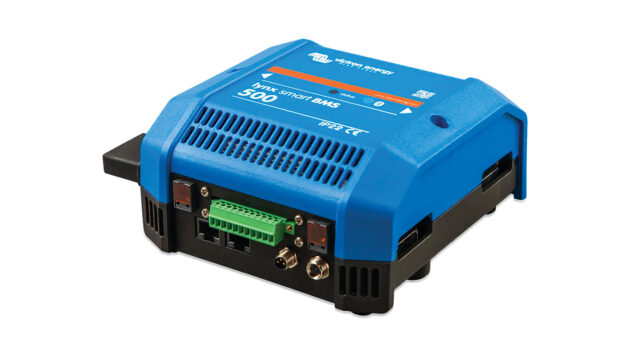
The BMS sits at the heart of operations, monitoring temperature and controlling charge and discharge
How safe is lithium iron phosphate?
Done properly, it’s extremely safe. It’s used for industrial applications like forklift trucks, where it does heavyweight work all day, every day. It’s used in domestic energy storage, where the engineering has to be bulletproof both for safety and longevity. And many of the companies that service these industries also service the marine industry. But there certainly remains a risk…
If the SEI layer is damaged, the cell’s natural chemical reactions can take over, causing an uncontrolled exothermic (energy-releasing) reaction called thermal runaway. This quickly becomes self-reinforcing because the heat produced increases the pace of the chemical reaction itself, until all of a cell’s energy has been released. It can be triggered by physical impacts, cell manufacturing defects, ageing, overcharging at low temperatures, over-discharge or overheating – and it can result in smoke, toxic gases, fire and explosion.
If one cell fails, its heat can also trigger surrounding cells so, in addition to proper management and protection, mitigation measures are also vital.
How can you mitigate the risks?
You could, in principle, import a BMS and a set of batteries from China and fit them yourself. A lot of people are also tempted to simply swap lead acid for lithium. But if you want a safe and effective system that doesn’t invalidate your insurance policy, having it fitted by a qualified professional, specifically certified by the manufacturer of your equipment, is a must.
A high-quality marine-specific BMS is, of course, key. It should be able to handle cell balancing, over/under-voltage protection and temperature monitoring, ideally with independent cell-level (rather than pack-level) monitoring – and it should be properly set up for your specific boat and systems.
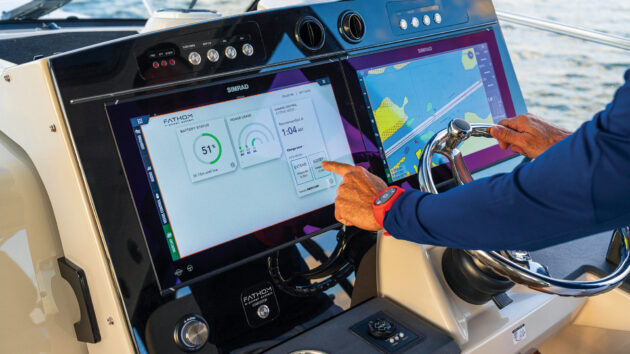
Properly managed lithium batteries can be discharged to a far greater degree than lead acid, AGM or gel batteries – and still last 3,500 cycles (or a decade of daily use)
Location and ventilation, as well as impact mitigation and overcurrent protection, with correctly rated fuses and breakers, are also vital. Short runs of properly supported marine-grade cabling with proper connections will help minimise chafe and vibration. Modern fire-proof materials in the casings and, potentially, additional fire-suppression safety measures, can also be fitted.
And a relay per battery that enables the system to isolate a problematic unit without disabling the cluster is a very worthwhile solution.
A low-temperature safeguard is also necessary because, if the temperature drops below zero, you can easily damage the cells by charging them at too high a rate. A self-heating plate is now a common solution. It simply sits at the bottom of the battery like an electric blanket. When the temperature drops to zero, the BMS sends the charging current through the heating blanket and when it reaches 5 degrees, it channels the charge back through the cells. In all cases, though, automation (and effective networking) is critical because it avoids the need for potentially slow and fallible human intervention if things do go wrong.
How green are they?
They’re by no means as green as people tend to think. On the one hand, they appear to help decarbonise transport; they provide storage for solar and wind energy to reduce the grid’s dependence on fossil fuels; and they are much more energy-efficient and longer lasting than traditional lead-acid batteries. On the other hand, they depend on energy-intensive, water-hungry and physically destructive mining practices.
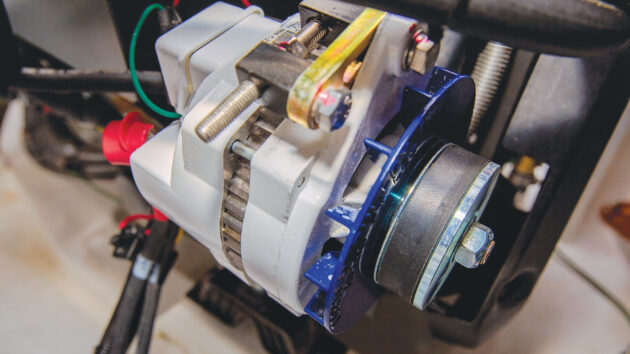
Generating charge from the main engines can be much faster and more efficient than using a separate diesel genset
They are also extremely carbon-intensive to make – far more so in fact than internal combustion engines. And while they are almost entirely recyclable in principle, the global recycling rate is still estimated at less than 5%. Many lithium batteries end up creating toxicity issues in landfill sites and there is still no credible end-of-life recycling protocol to help guide and refine those practices.
The simple reality is that it costs far more to recycle lithium than it does to mine it afresh, so until that changes, these end-of-life issues are going to get worse. And if lawmakers do finally step in to make manufacturers responsible for recycling and disposal at end of life, prices will increase to potentially prohibitive levels.
Are solid-state batteries worthwhile?
They look very promising. By replacing a lithium battery’s liquid electrolyte with a solid (ceramic or polymer) material and using a pure lithium anode, they increase the energy density, further reducing the size and weight of your battery bank. The fact that the internal resistance is two to three times lower means they also generate far less heat during use, which removes the need for cooling systems and reduces cell degradation, theoretically extending the life of the battery. They also offer much faster charging (up to four times faster), while also improving safety by eliminating flammable materials and reducing short-circuit risks.
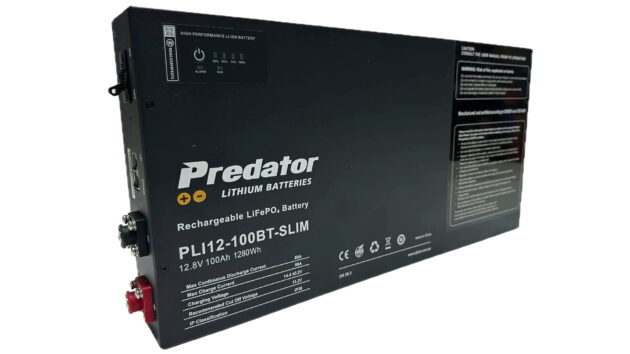
Predator was one of the fi rst companies to bring lithium batteries into the UK
But while functioning models do exist, this technology is still in its infancy so it will take a few years for testing and cost-effective production to make them truly viable. In the interim, semi-solid lithium batteries may have lower energy density (only a little higher than traditional lithium batteries) but they offer many of the same advantages as solid-state technology and are already available at realistic prices.
What about sodium-ion?
Sodium-ion batteries also look promising. Once again, they use a cathode, an anode and an electrolyte to move ions but their use of relatively cheap and abundant raw materials like sodium, iron and manganese makes them much more sustainable and cost-effective than lithium. They also offer much improved cold-weather performance (down to -40°C), as well as faster charging and improved safety. But lower energy density means they are likely to remain best suited to grid storage and smaller, more affordable EVs.
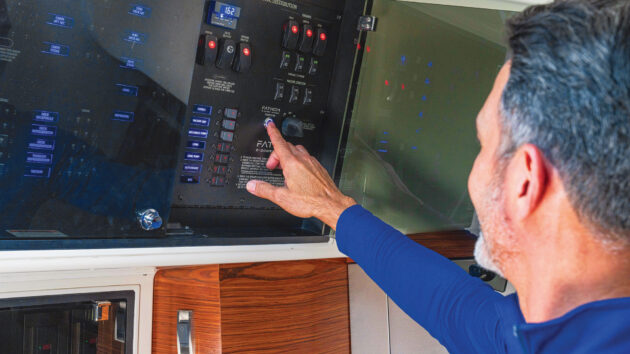
The Fathom e-Power system is designed to replace the generator on board your boat
The final word
Lithium batteries are by no means the perfect solution. They require careful management, their environmental credentials are questionable and, given the scale and ongoing growth of the modern industry, they remain oddly under-regulated. In a sector defined by rapid and continuous innovation and advancement, it’s also tempting for boaters to resist taking the plunge in anticipation of tomorrow’s game-changing technology – but the reality is that, although lithium batteries are undoubtedly more a stopgap than a final solution, they remain the best option we have today.
So if your boating lifestyle makes it worthwhile, and you can afford to get the latest and best-quality branded equipment installed by a specialist, then a carefully considered lithium battery purchase can have a genuinely transformative impact on the way you enjoy your boat.
Sincerest thanks to Predator Batteries and Mastervolt for their assistance in the creation of this article.
 If you enjoyed this….
 If you enjoyed this….
Motor Boat & Yachting is the world’s leading magazine for Motoryacht enthusiasts. Every month we have inspirational adventures and practical features to help you realise your sailing dreams, as well as tests and news of all the latest motorboats.
Plus you’ll get our quarterly Custom Yachting supplement where we share the last on offer in the superyacht world and at the luxury end of the market.
Build your knowledge with a subscription delivered to your door. See our latest offers and save at least 30% off the cover price.
Note: We may earn a commission when you buy through links on our site, at no extra cost to you. This doesn’t affect our editorial independence.