

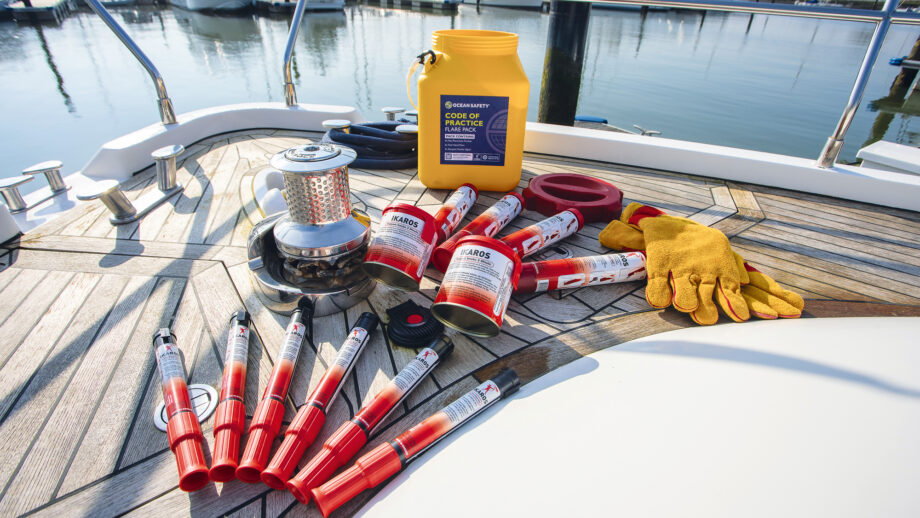
Motor Boat & Yachting's resident expert, Jon Mendez, takes a look at electronic and pyrotechnic flares
Flares still play an important role in helping rescuers locate you in an emergency, despite the risks and concerns over their end-of-life disposal. Modern laser/LED distress beacons can do a similar job but until they become widely recognised as acceptable alternatives, I would still carry both.
Flares are my first point of call during a distress/Mayday situation if I have lost or can’t establish two-way communication via VHF, mobile or satellite phone. They are usually supplied in packs for inshore, coastal or offshore use. Inshore packs are designed for use up to three miles from help. They usually contain 2 x red handheld flares and 2 x orange handheld smokes.
Coastal packs are for up to 7 miles and add 2 x red parachute flares. Offshore packs are for over 7 miles, they boost the contents to 4 x parachute flares, 4 x red handhelds and 2 orange handheld smokes. Sometimes the orange handheld smokes are replaced with floating ones that last twice as long. I would also recommend adding extra parachute flares if you regularly travel further away from help.
All flares need proper storage. Most come in a suitable plastic container. If you plan to use your own container, it needs to be strong, waterproof, portable and buoyant so that you can take it into a liferaft if you need to abandon ship.
It’s best practice to keep this container in a dedicated flares locker so it can easily be found and removed. You can consider a mixed storage locker, provided that the flares remain easy to access, are correctly labelled and preferably near your chosen muster point.
Article continues below…
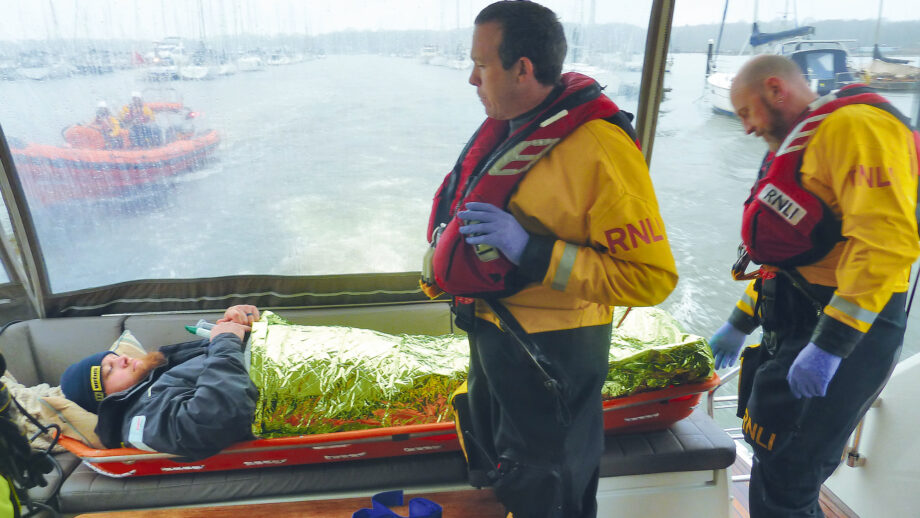
How to deal with a medical emergency at sea
How to use buoyage to navigate
Correct usage is crucial and I would highly recommend attending a flare-firing practice demonstration – the experience is invaluable. If that’s not an option, make sure you are familiar with how your flares work. Which end do they fire from? Could you do it in the dark with no light or time to read the instructions?
The key when firing any flare is that it must be angled slightly downwind (parachute flares are designed to seek the wind), preferably with it held over the side of the boat so that any sparks fall into the water. And always hold it across your body rather than in line so that if it shoots out of the wrong end, it still misses you.
Gloves are a good idea too, preferably thick leather or at least non-flammable ones so there is no danger of melted plastic sticking to your hands if it goes wrong. Once used, put them into a bucket of water to cool as they could be very hot.
Flares are a time-limited product, with a production and expiry date. After the expiry date they may lose intensity, colour or not fire at all. Out-of-date unused flares can usually be disposed of through your local chandlers when you buy new ones.
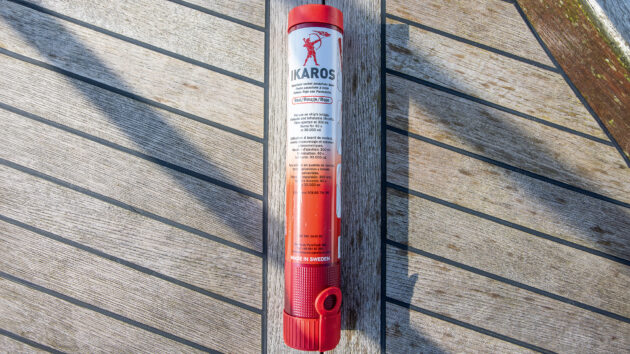
Red parachute flare
Once fired, a rocket propels it from the capsule to a height of 300m where it burns for 40 seconds at 30,000 candelas. This means it is visible from up to 25 miles away. The correct posture is to hold the flare across your body so if it misfires it doesn’t hit you.
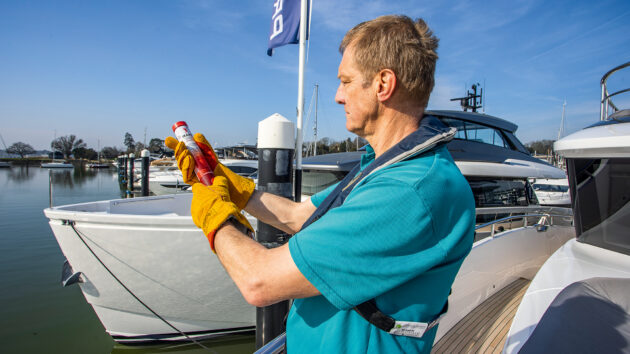
Correct usage
Any handheld flare needs to be held out over the side of the boat, facing downwind and with both ends pointing across your body so if it is does misfire any sparks or projectiles end up in the water rather than on you or your boat.
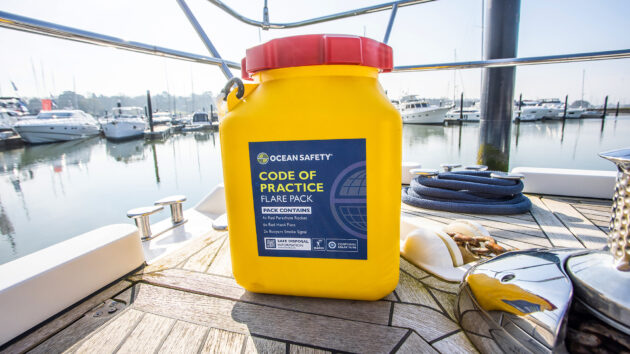
Flare container
This container is made for the job. It’s bright, robust, waterproof, buoyant and easy to carry. It has room for a full Code of Practice flare pack containing 4 parachutes, 6 handheld reds, 2 buoyant smokes and gloves.
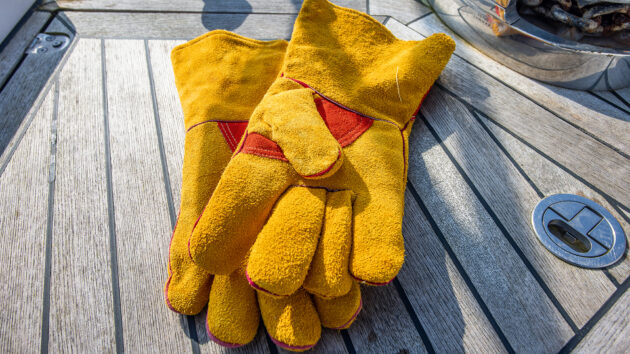
Flare gloves
These safety gloves are made of thick, extra strong leather that will protect you from any hot debris when you fire or hold a lit flare. I would highly recommend adding a pair if your flare pack doesn’t already contain them.
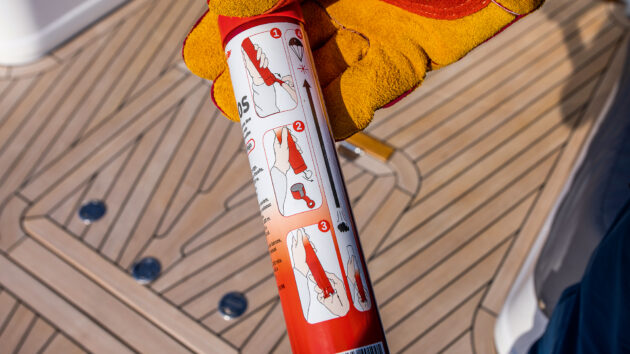
Instructions
All flares have written or pictographic images to show you what to do. Take time to read them whilst safely moored. You don’t want to be scrambling around for reading glasses and a torch when you need to fire them in a hurry at night!
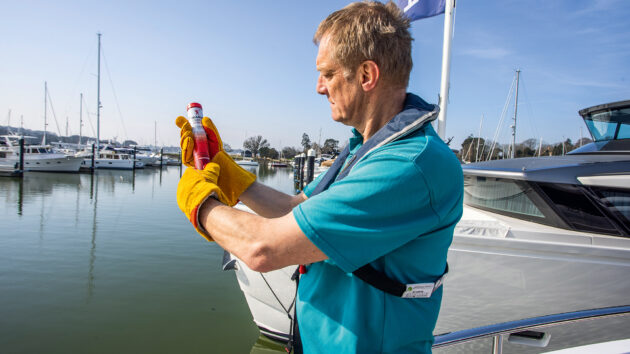
Incorrect usage
This shows how NOT to fire a flare. Although it is pointing downwind, the bottom of the flare is pointing at me. If the flare were to backfire, it could fire straight into my body with potentially life-threatening consequences.
 If you enjoyed this….
 If you enjoyed this….
Motor Boat & Yachting is the world’s leading magazine for Motoryacht enthusiasts. Every month we have inspirational adventures and practical features to help you realise your sailing dreams, as well as tests and news of all the latest motorboats.
Plus you’ll get our quarterly Custom Yachting supplement where we share the last on offer in the superyacht world and at the luxury end of the market.
Build your knowledge with a subscription delivered to your door. See our latest offers and save at least 30% off the cover price.
Note: We may earn a commission when you buy through links on our site, at no extra cost to you. This doesn’t affect our editorial independence.