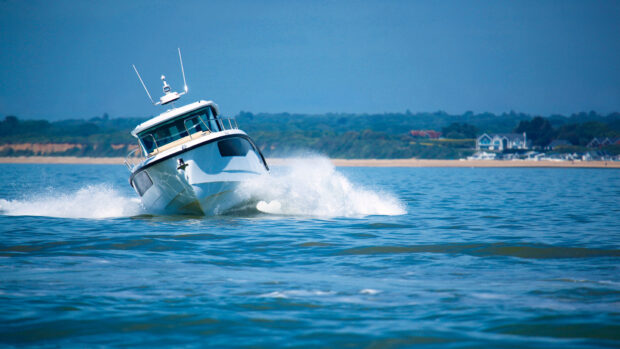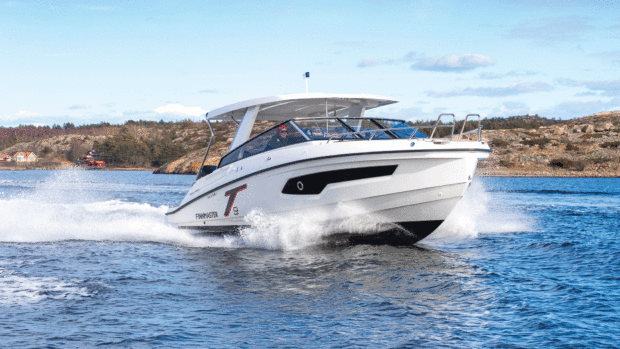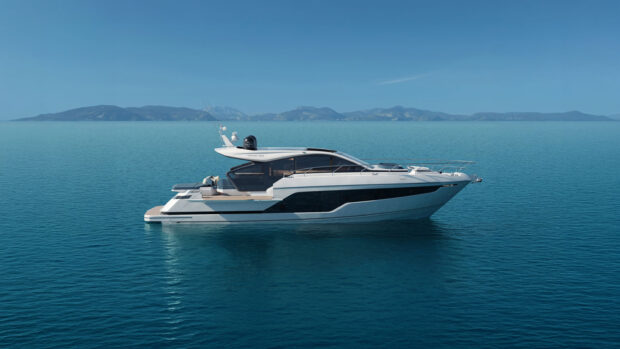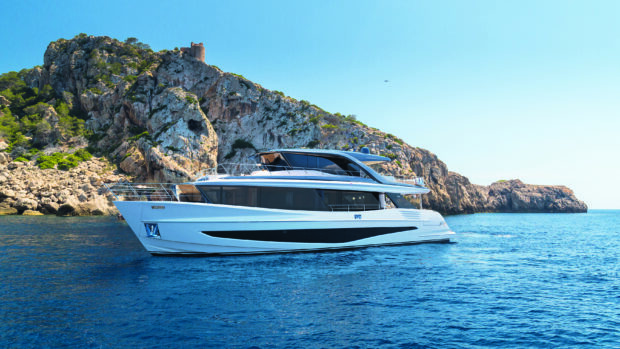


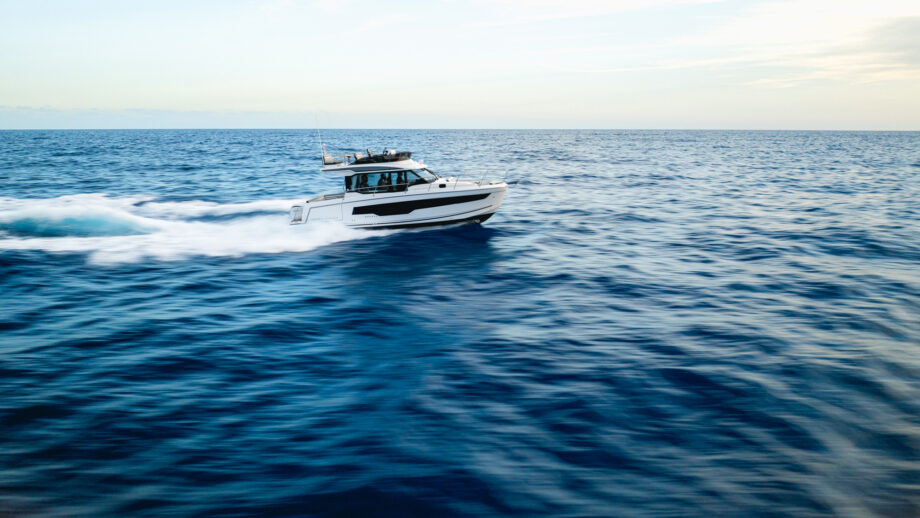
The Jeanneau Merry Fisher 1095 Fly Series 2 builds on a popular concept with a beamier hull and significant upgrades to the flybridge and foredeck
The ubiquitous Merry Fisher has been so successful over the years that it has become almost an independent brand in its own right – and a key reason for that is the populist simplicity of the underlying concept.
At its best, a Merry Fisher is a flexible, multi-purpose family platform that is affordable to buy and easy to use.
That was certainly the case with the original MF1095 Fly and, as we arrive at Lavagna near Genoa on Italy’s Ligurian coast, it becomes clear that the Series 2 version of that boat is committed to achieving much the same thing.
Now that wouldn’t generally tend to excite us very much but not only is this the smallest Merry Fisher platform with a flybridge.
It’s also a boat that Jeanneau tells us is so substantially different from the S1 model that owners of that original boat will be well able to justify trading in and making the upgrade.
It’s a bold claim but does it really hold water?
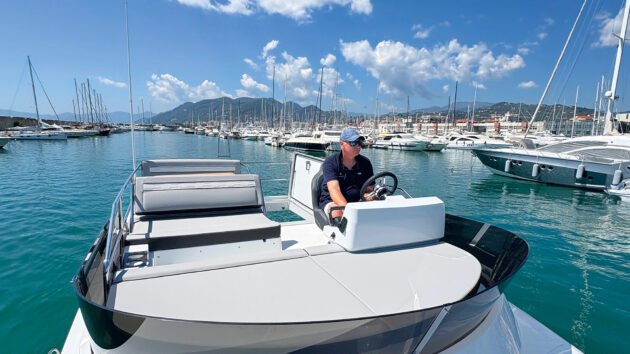
There’s plenty of company to be had, thanks to a forward sunbed and a convertible port dinette
Cockpit creativity
At first glance, things do seem relatively similar.
You get twin outboards and an offset pilothouse with a narrower raised port side deck and a deeper, wider side deck to starboard.
You get a beam-forward boat hull, a comparable style and, on the face of it, a similar deck layout.
But this new boat actually uses a hull that’s around 4cm beamier than the old model and, if that seems like a relatively minor tweak, the differences become much easier to see when you step on board.
As on the S1, the chief point of access from the swim platform to the cockpit is on the starboard side.
That enables the rest of the transom to be used for an l-shaped bench that only stops on the port side where the superstructure kicks in.
In fact, it’s a sign of how hard this boat works the space that the bench seat even encompasses the region directly next to the port side gate.
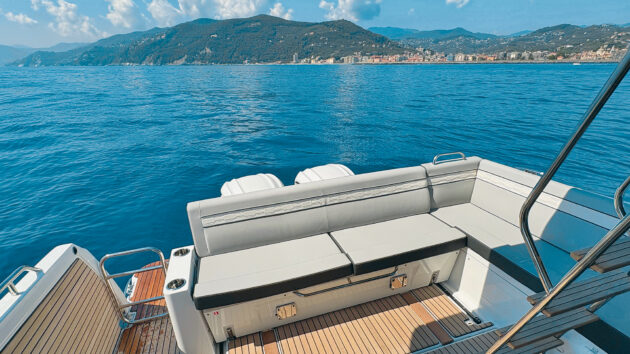
The uprated six-man foredeck lounge can be converted into a full-length sunpad
The flybridge steps collaborate in that drive for spatial efficiency by hinging flat against the superstructure when not in use and the aft bench also expands the deck space by sliding aft above the Outboard engine well – and the rest of the detailing here is equally strong.
The port backrest, for instance, pulls out to grant you access to the port swim platform when the bench is slid back.
There are also two table brackets for extra flexibility, with a pair of tables that can be used just as easily on the flybridge as in the cockpit.
The storage inside the benches is big and well lined and, as an outboard-powered boat, there’s a huge cavity beneath the deck too, nestling between the twin 370l fuel tanks, with lots of room for your rails, lines, fenders and canvases.
However, the most obvious cockpit difference is the fact that, in place of the old model’s starboard side gate, you get a full drop-down terrace as standard.
And while that does a good job of expanding the deck out over the water, it also means you can rig the ladder and reboard from the water on the starboard side, well away from the engines.
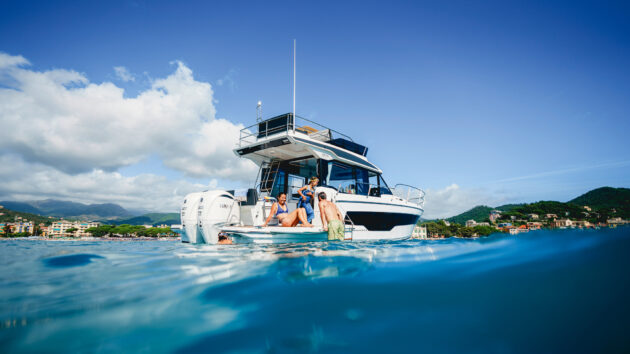
The idea behind the new S2 model is to show enough improvement that even S1 owners will see the merit in upgrading
Foredeck and flybridge
There are no roof rails to grab hold of as you make your way forward but such is the height of the peripheral guardrails that you really don’t need one.
The bow is easily reached up a couple of steps from the skipper’s side door and this is where the new design really pays dividends.
Forget the traditional set of central cushions.
What we have here is a lofty island sunbed with raised backrests and fibreglass mouldings on both sides for excellent security.
There’s also a nice big window built into the forward edge of this unit for great light down below, plus a lateral trough just ahead, enabling you to perch at the forepeak and use this space as a facing lounge for up to six people, very much in the vein of the excellent Merry Fisher 1295.
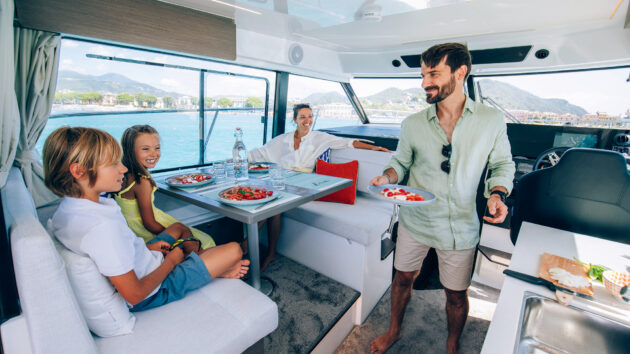
The saloon dinette increases potential sleeping capacity to eight
The flybridge is also a conspicuous step up, thanks to a starboard dinette with reversible backrests and a sunbed infill that enables you either to sit alongside the skipper or to create a full wraparound companion zone.
As for the low-slung port helm, that comes fully specced with a 9in plotter, bow thruster controls, tabs switches and optional joystick, plus a fully adjustable wheel.
And just as the helm seat can slide fore and aft, it can also rotate to face across to the dinette, creating a dining space (albeit a slightly staggered one) for up to five people.
There’s no wet bar up here and no option for a fridge but if it were down to us, we’d still be keen to make the most of this upgraded flybridge by installing a fridge in a seat base.
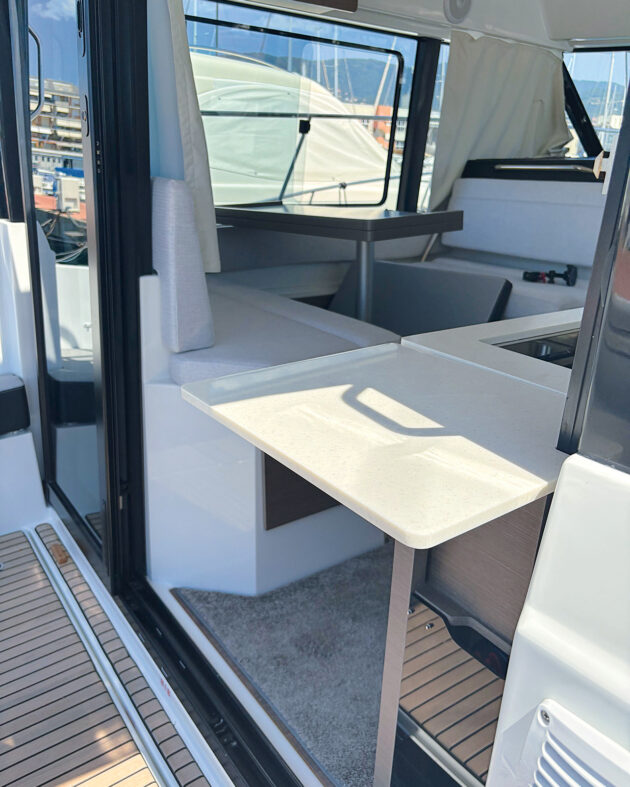
A fold-up worktop extension takes the galley out into the cockpit
Saloon and cabins
Back down in the saloon, it’s good to see that the starboard galley extends out into the cockpit by means of some sliding doors and a small, but very worthwhile, flip-up bar at work surface height.
The galley also features a microwave amongst the cabinetry, plus a good section of work surface, a decent sink and an induction hob sunk 5cm beneath the level of the work surface, presumably in a bid to make your pans that bit more secure.
It’s quite awkward to use, though, so future models will see the hob lifted back up to worktop level in a more conventional fashion.
Over on the port side, the new boat also uses deeper, larger glass panels in the superstructure to bring extra light and better views to those perched at the four-man dinette.
There’s a large opening window on this side too, for ventilation as well as easier communication during manoeuvres.
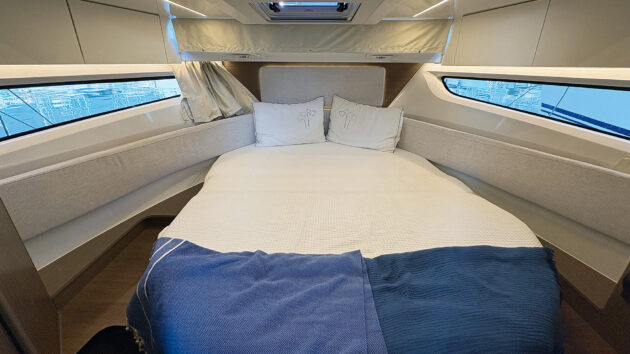
A big forward beam, lofty foredeck and extra windows mean good things for the owner’s cabin
And if you opt for the rigid infill, you can convert this section into a double bed, taking sleeping capacity to eight people.
As you would expect, the dinette is raised to help maximise views and to provide additional volume down below.
And while that limits its value for storage, that’s very well taken care of by means of a couple of hatches beneath the deck.
The aft one on the test boat contains an ac unit to service the two guest cabins.
But in addition to a handy storage trough, the forward one provides direct access to the third cabin so you can dump your gear down there without actually having to go below.
And that’s telling because, while you get three cabins and a convertible saloon, the 1095 is really designed as a proper cruising boat for a couple of couples or a family of four with an overspill cabin for bulky kit.
That’s certainly the way the test boat has been used.
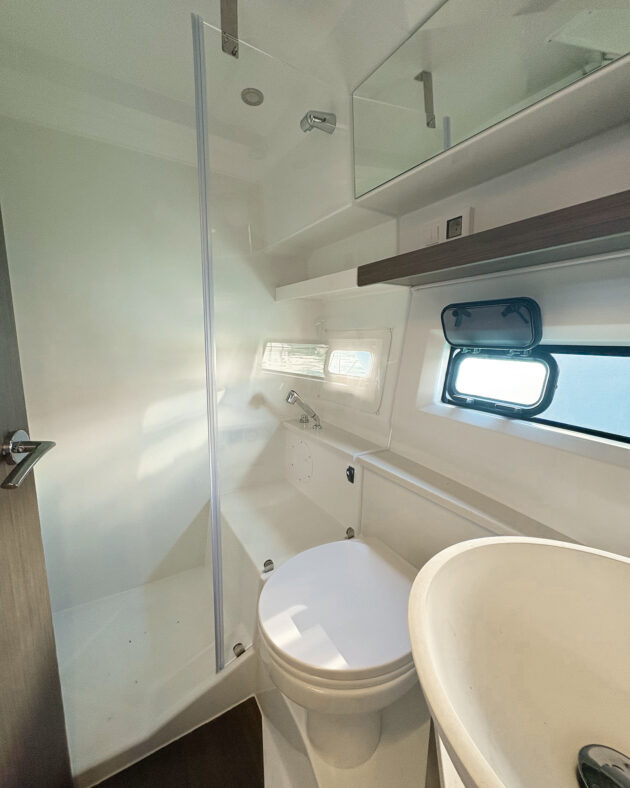
The heads is modest but fine
The third cabin is the dumping spot for all kinds of tables, brackets, infills, cushions and canvases that might otherwise make the boat feel a shade untidy.
There’s a second fridge in here too, which makes plenty of sense, given that it’s the least likely space to be occupied overnight.
And on a similar note, the electrics panel in the port twin cabin is also due to be shifted into a cupboard in this third cabin to minimise any overnight intrusion created by its red and blue led lights.
The owner’s cabin has also been subtly uprated.
You now get a dedicated internal door to provide direct access to the shared heads compartment.
With the big hull windows and the bow sunbed glazing, light is also a big strength in here and the heads compartment itself apparently features a larger shower lip to help keep the floor a little dryer.
That’s all positive stuff but as regards the fit and finish, this prototype boat is not yet perfect.
During our two-day trial, the helm seat bolster broke away from its bracket, a handle came off a cabin door and the flybridge hatch fell off its ram.
The 160l watertank also seems a shade mean for a six-berth cruiser so we’d definitely look to take advantage of the optional extra 100 litres.
But as model upgrades go, you would have to say that the 1095 S2 already feels like a very well judged piece of yacht design.
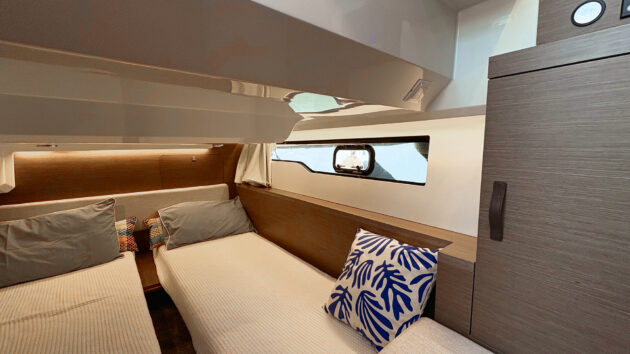
The guest twin gets plenty of light and storage, plus the option of an infill for use as a double
Sea manners
We’re told that the new 1095 uses a revised construction process for a stronger hull and certainly, any creaks or rattles at sea seem to be limited to the fixtures and fittings.
But in terms of engine noise, this is nonetheless quite a loud boat.
If you were planning on an extended passage, you’d certainly want to keep the aft doors shut to subdue the racket of those yamaha v6s.
When you do so, there are vents above the screen, which direct a breeze over your face from the leading edge of the roof structure; and the starboard door and the port window also help compensate for the reduced airflow when the aft doors are shut.
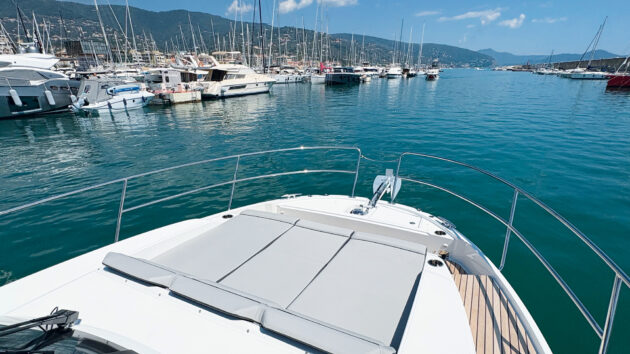
Integrated backrests and secure side mouldings are a welcome touch
But even so, you might want to invest in ac and you might also want to investigate whether the optional mercury v8s would deliver a more refined experience, as well as an extra couple of knots and a reduced purchase price.
Even as things stand though, the drive here is pretty strong.
It’s by no means a quick boat but it handles well, provides a decent bit of splash deflection and responds very effectively to tab and leg angle adjustments.
In fact, it provides plenty of evidence that jeanneau’s recent policy of factory fitting all its twin rigs is very much the right call; and the helm position is good too.
There’s lots of glare from the glossy black plastic of the dash but that will hopefully be remedied on future production models.
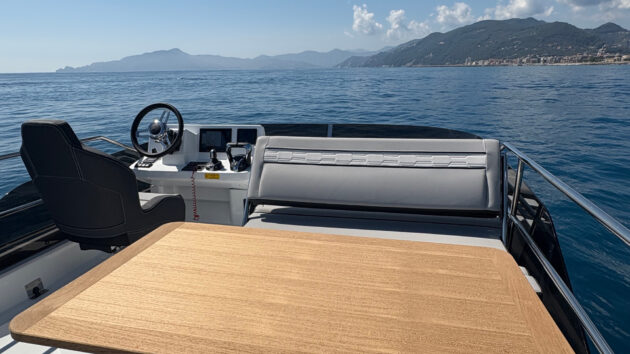
Reversible backrests and sun bed infills are great – but the flybridge could use a fridge
There’s also excellent visibility, particularly by the standards of a compact flybridge cruiser, plus good space for a pair of 12in chartplotters.
And in addition to all the usual helm station touch points, you get a very handy storage pouch, a sturdy foot brace and a rotating helm seat with fore and aft movement, very much like the one up on the flybridge.
Jeanneau Merry Fisher 1095 Fly Series 2 specifications
LOA: 35ft 3in (10.75m)
BEAM: 11ft 4in (3.45m)
DRAFT: 2ft 2in (0.66m)
DISPLACEMENT: 5,037kg (light)
FUEL CAPACITY: 740L
WATER CAPACITY: 160L
ENGINE: Twin 300-350hp outboards
Jeanneau Merry Fisher 1095 Fly Series 2 costs & options
Price: from €280,080 inc VAT. Test boat includes the following options…
Forward sunshade: €1,530
Bow lounge furniture: €2,510
Convertible saloon bed: €600
Comfort pack: €2,200
Zipwake auto tabs: €3,080
Yamaha V6 300 outboards: €17,280
Joystick control: €9,000
 If you enjoyed this….
 If you enjoyed this….
Motor Boat & Yachting is the world’s leading magazine for Motoryacht enthusiasts. Every month we have inspirational adventures and practical features to help you realise your sailing dreams, as well as tests and news of all the latest motorboats.
Plus you’ll get our quarterly Custom Yachting supplement where we share the last on offer in the superyacht world and at the luxury end of the market.
Build your knowledge with a subscription delivered to your door. See our latest offers and save at least 30% off the cover price.
Note: We may earn a commission when you buy through links on our site, at no extra cost to you. This doesn’t affect our editorial independence.
Verdict
The new 1095 fly series 2 appears to us to achieve precisely what jeanneau intended. The foredeck and flybridge are both major upgrades on what went before. The owner’s direct heads access is a handy step up and the drive, though quite noisy, is commendably flat and frugal and easy to control at sensible speeds in moderate chop. It’s also a bigger boat with a brighter saloon and while the flagship 1295 remains a major (and very worthwhile) step up for those with the money to consider it, this particular model revamp is so significant that upgrading from an s1 to an s2 looks like a genuinely worthwhile investment.