

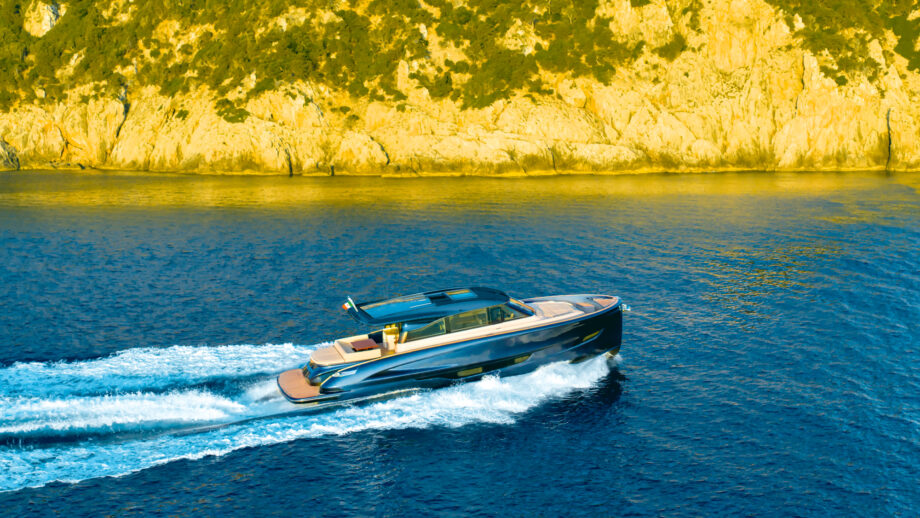
Can the new flagship of the Solaris Power Coupé range deliver the glamour and performance of an open sportscruiser with the space and comfort of an enclosed grand tourer?
Solaris has come a long way since it launched its Power range in 2019w ith a quirky looking 57ft lobster boat. In six short years it has added more than a dozen new models from 40ft to 70ft, encompassing everything from open sportscruisers to coupés, flybridges and even a new Long Range motor yacht.
Despite this broad spectrum approach, they all share the same key traits: voluptuous looks, robust seakeeping, practical walkaround decks, high-end finishes and premium pricing to match. It’s a recipe that has stood them in good stead. However, it is not without its compromises, particularly in the Coupé models where those wide walkaround decks and svelte looks often come at the expense of reduced interior volume. This new 60-footer, which is the current flagship of the Coupé range, hopes to address that balance while still delivering all those desirable characteristics.
Design Principles
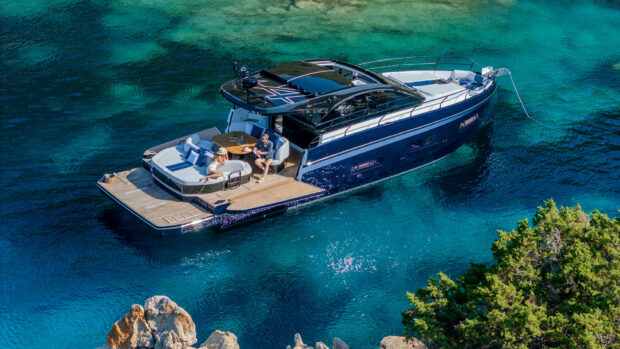
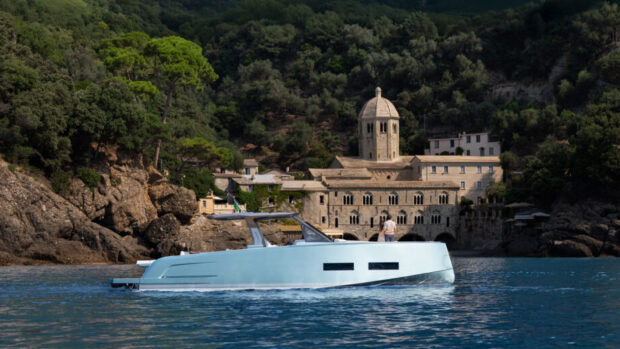
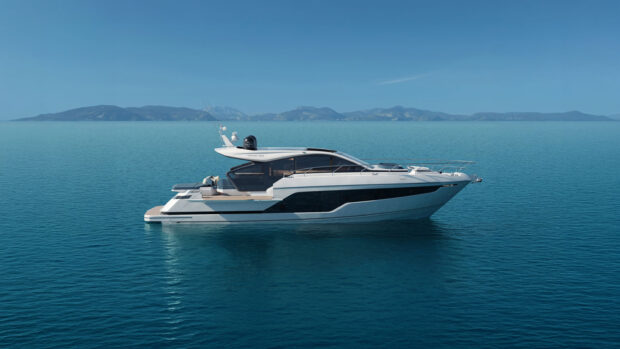
It certainly looks the part in the full glare of the Riviera sunshine where its luxuriantly contoured topsides and dark blue metallic paintwork seem purposefully designed to catch the light and accentuate its curves. It may share the same hull moulding as
the 60 Open, but the Coupé is arguably even prettier and certainly makes a more alluring proposition for year-round use, thanks to its adaptable enclosed deck saloon.
As with all recent Solaris Power models, it was designed in collaboration with Brunello Acampora and Victory Design. Having made their name in the world of powerboat racing, it’s no surprise that Victory puts just as much effort into how the boat performs as it does into how it looks. The brief, however, was not to build the fastest boat around but one that offers stability, seakeeping, comfort and fuel efficiency across a wide range of different cruising speeds.
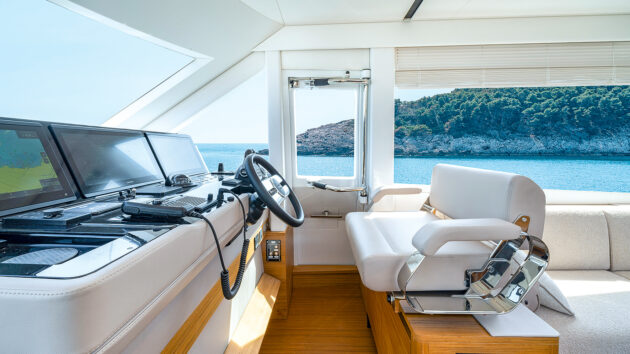
Stylish helm seat is fi ne for laid-back cruising duties but the ergonomics favour a standing position
To achieve that, the hull shape starts with a relatively sharp, vertical bow that cleaves the waves and extends the waterline length for faster displacement cruising. Heavy flaring of the topsides above the waterline helps push the waves aside as they ride up the hull, helping to keep the decks as dry as possible.
The sharp deadrise angle at the bow then flattens out towards the stern to promote greater stability and lift for more efficient cruising at planing speeds. A low centre of gravity and the use of Volvo Penta’s slippery IPS pod drives, instead of drag-inducing shafts, maximise the efficiency gains while leaving more space in front of them for accommodation. That’s the theory at least so how does it all work in practice?
Outside space
Given how much effort goes into the way it looks, it’s no surprise the aft sunbed sits atop a tender garage large enough to keep a 3m mini RIB and a Seabob tucked neatly out of sight. A drop-down hydraulic bathing platform allows these to be launched directly into the sea down a sloped track.
Hinged sections of the aft bulwark cappings do a similar job of concealing the stern mooring gear and maintaining the flow of that elegant sloping sheerline, while still allowing easy access to the cleats, winches and fairleads. When folded forward these covers do feel a little vulnerable to a misplaced hand or roving fender but perhaps that’s the price you pay for visual perfection.
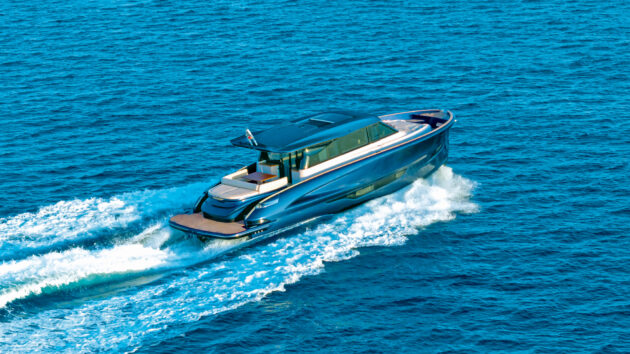
It may share the same hull mouldings as the 60 Open, but the Coupé is even prettier and more alluring for year-round use
Strangely, while the 60 Open has the option of drop-down side terraces, the Coupé does not, putting the emphasis on a secure, protected cockpit instead. The hard top overhang already reaches quite a long way back but an additional electric folding sunshade extends this all the way out over the seating area.
The C-shaped dinette has a sliding backrest so you can push it forward to create a full-length sunpad and while this arrangement does a good job of maximising seating space, the large fixed teak table does mean guests have to shuffle in and out every time someone wants to move. That said, I’m sure Solaris could knock you up a folding hi-lo table on request.
Cleverly, the portside wetbar includes dedicated storage for a couple of director’s chairs so you can make use of the side of the table without a bench. This precludes fitting a fridge in this space, but while the port one does have a sink set into its immaculate teak worksurface, the starboard one lifts to reveal a Volvo joystick sunk into recess for stern-to berthing. It’s a neat idea but I wonder how easy it will be to use at this rather unnatural angle.
No such concerns about the side decks which are blissfully wide, flat and well protected by hip-high bulwarks, annulling the need for ‘ugly’ stainless steel guard rails. This does mean the fenders have to be attached using preset plugs rather than tied around a rail, but arguably that leaves less room for errors. Our only grumble here is that the starboard side skipper’s door, handy as it is for quick access from the helm, does an equally good job of blocking the side deck when open.
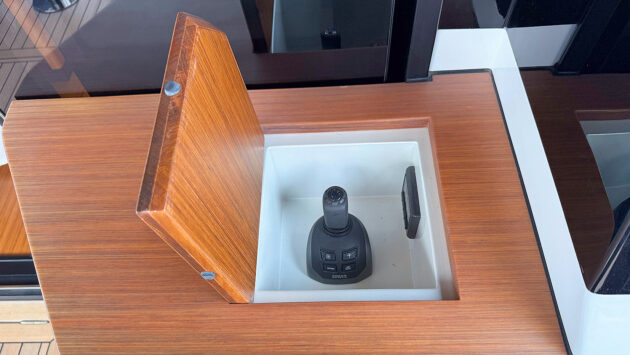
The outside joystick allows a great view for stern-to berthing but it’s not the most comfortable of hand positions
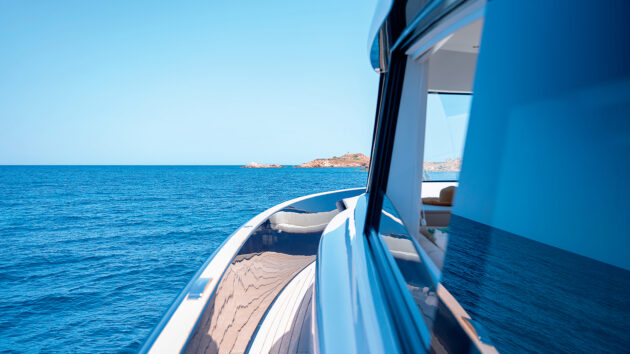
Once you reach the foredeck, you’re greeted by another wonderfully, clean uncluttered space. As with the stern mooring gear, the folding anchor mechanism is hidden away under a pair of hatches while the cleats and even the winch sit flush with the deck, only lifting up when needed. Pop up deck lights and recessed cupholders ensure it doubles as a cosy little guest zone with two teak corner seats complementing the forward-facing bench and sunpads.
Interior layout
Two-section sliding doors and a lift-up window create a near seamless connection between cockpit and saloon. The aft galley makes full use of this with a narrow bar/serving area facing out over the stern. The standard layout includes a full-height fridge freezer to starboard, but on our test boat, this had been requisitioned to create a small day heads.
Long drop-down side windows make a big difference to the feeling of openness in the saloon
It’s a clever idea and convenient for guests in the cockpit but not the most discreet of locations. It also means chilling space is restricted to a couple of small under counter fridges, a six-bottle wine fridge and another slender drawer fridge under the sofa. And while we love the large size of the sink, we do wonder where you’re meant to put the hefty slab of marble that covers it when not in use.
However, the undisputed star of the galley is a corner section of the work top that at the touch of a button rises up to reveal a espresso machine – how brilliantly Italian! Just as slick but arguably far more useful are the two long electric windows which drop down on either side of the saloon.
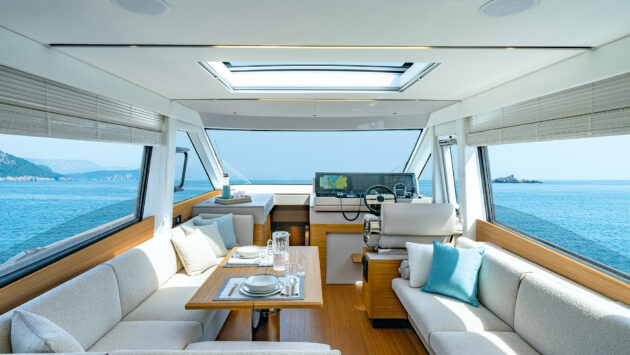
Long electric saloon windows drop down, allowing a fresh sea breeze to waft through the interior
It’s surprising more boat builders don’t adopt this idea, as however well air-conditioned the space may be there is nothing nicer than letting a fresh sea breeze waft through the interior. In conjunction with the opening sunroof and skipper’s door, it transforms a smart but relatively simple deck saloon into something much more special that combines the weather protection of a fully enclosed coupé with the outdoor appeal of an open sportscruiser.
The liberal use of teak on the main deck extends below deck where customers have the option of several different layouts. The most luxurious of these has a pair of full beam VIP suites at either end with a small lower lounge between them. The second option is to replace the lower lounge with a third twin-bed guest cabin. The final option is to keep the lower lounge and split the full-beam amidships cabin into two smaller guest doubles.
Our test boat had the second layout, which seems the logical choice for a coupé with a perfectly good lounge on the main deck, although the owner had chosen to sacrifice one of the beds in the third cabin for a work station so it can double as a floating office. Not surprisingly, it’s fairly tight in here but the headroom is decent and there’s even a small ensuite for it.
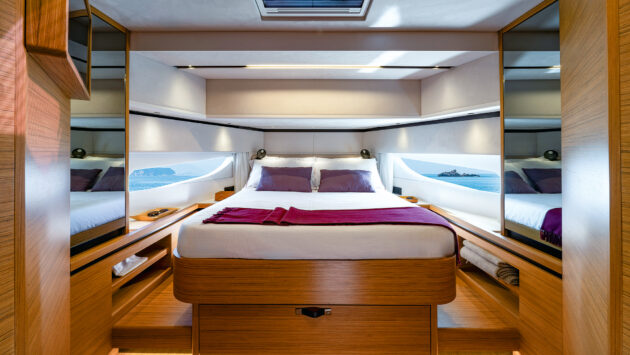
Warm teak and cool white fabrics provide a natural balance in the forward VIP
The two main cabins are considerably more spacious.
The forward VIP does start to lose headroom over the bed due to that foredeck well, and there’s a washer/dryer tucked behind a panel in the ensuite bathroom, but we can’t see any guests being disappointed with their lot given the amount of space, light and style at their disposal.
Even this pales into comparison next to the lavish owner’s cabin. With full standing headroom all around the bed, a cosy sofa to starboard and masses of storage across a variety of drawers, shelves and hanging lockers, it is as stylish as it is spacious. Everything, from the choice of materials to the lighting, is close to perfection, the only questionable decision is the use of net curtains to cover the hull windows – surely blinds would look infinitely classier?
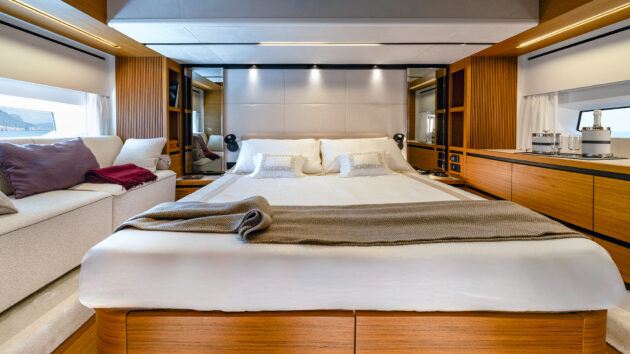
The full beam owner’s suite is bigger than you’d expect of such a stylish looking coupé
Driving impressions
Solaris makes a big deal about how its boats perform at sea and the 60 Coupé does deliver better than average results on all the key metrics it claims to. That broad stern and low centre of gravity blesses it with impressive stability both at rest and under way, and although there is an option for a Seakeeper stabiliser we didn’t miss not having one in the test boat.
It helped that we had the most powerful engine option of twin 1,000hp IPS1350s at our disposal as this enabled us to reach a top speed just shy of 36 knots – pretty impressive for a boat of this size, if not particularly exhilarating. For comparison, the Azimut S60 we tested with triple IPS700s reached an identical 35.5 knots while the Sunseeker Predator 60 Evo, fitted with the entry-level 900hp D13s, could only muster 33.5 knots.
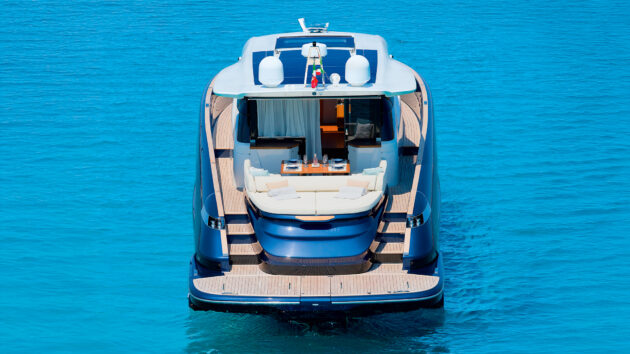
Few sports coupés look as good as the Solaris Power 60, especially from this angle
Fuel consumption also seems par for the course at around 8-10 litres per nautical mile all the way from 17-35 knots, again very similar to both the above-mentioned rivals. On the plus side, it is one of those boats that feels comfortable cruising at almost any speed from 8 to 35 knots, with little change in attitude, poise or refinement. It’s not quite the Rolls-Royce driving experience that one YouTube channel likened it to – neither the ride quality nor the refinement is that exceptional – but it’s certainly a more relaxing experience than most open rivals.
The same could be said of the handling, which while commendably assured, did not stand out as anything to write home about. The initial turn in is fairly quick, responding swiftly to any input at the helm, but as with most IPS-driven boats soon runs out of lock resulting in a disappointingly wide turning circle. The Grand Banks 60 we tested last month, for instance, would run rings around it.
The helm position is well set up if you’re in a standing position but you do need to take a long hard look over your left shoulder before turning to port as the roofline obscures much of the view once it begins leaning into the turn. Opting for a sitting position is best reserved for cruising duties as the throttles are a bit of a stretch away.
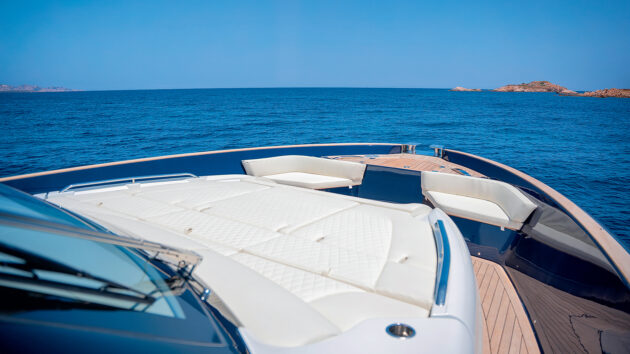
Deep bulwarks allow easy access to a very secure-feeling foredeck lounge
Solaris Power 60 Coupé specification
LOA: 60ft 0in (18.29m)
BEAM: 17ft 6in (5.35m)
DRAFT: 5ft 7in (1.7m)
DISPLACEMENT: 26.5 tonnes
FUEL CAPACITY: 3,000 litres
WATER CAPACITY: 600 litres
ENGINES: 2 x Volvo Penta 600hp IPS800, 725hp IPS950 or 1,000hp IPS1350
Solaris Power 60 Coupé costs & options
Price from: €2.11m ex tax
Upgrade to IPS1350: €352,000
Full-beam aft owner’s cabin: € 22,300
Twin guest cabin: € 15,200
Additional head: € 11,700
Crew cabin with head: € 26,800
 If you enjoyed this….
 If you enjoyed this….
Motor Boat & Yachting is the world’s leading magazine for Motoryacht enthusiasts. Every month we have inspirational adventures and practical features to help you realise your sailing dreams, as well as tests and news of all the latest motorboats.
Plus you’ll get our quarterly Custom Yachting supplement where we share the last on offer in the superyacht world and at the luxury end of the market.
Build your knowledge with a subscription delivered to your door. See our latest offers and save at least 30% off the cover price.
Note: We may earn a commission when you buy through links on our site, at no extra cost to you. This doesn’t affect our editorial independence.
Verdict
The Solaris Power 60 Coupé is the consummate Grand Tourer. Fast, refined, lovely to look at, effortless to drive and comfortable to travel in, it’s a craft that will make you feel good every time you step inside its welcoming embrace. Its seakeeping, while commendable for such a good looking coupé, isn’t quite as exceptional as its makers would have you believe, but it does offer a relaxing ride at a range of different cruising speeds and enough performance to back up those looks. The real joy of this model is that it offers all the pleasures of owning a Solaris Power without the limitations of an open design or the restrictions of an enclosed one – those big drop down windows go a long way to offering the best of both worlds