

Seakeeper’s new vessel attitude control system, Ride, is far more than just a glorified auto-trim mechanism, as Hugo Andreae found out during an exclusive sea trial
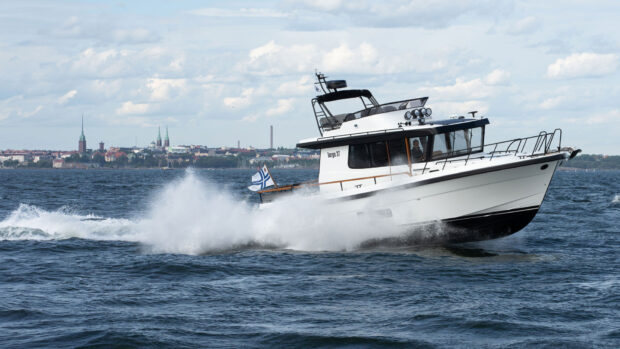
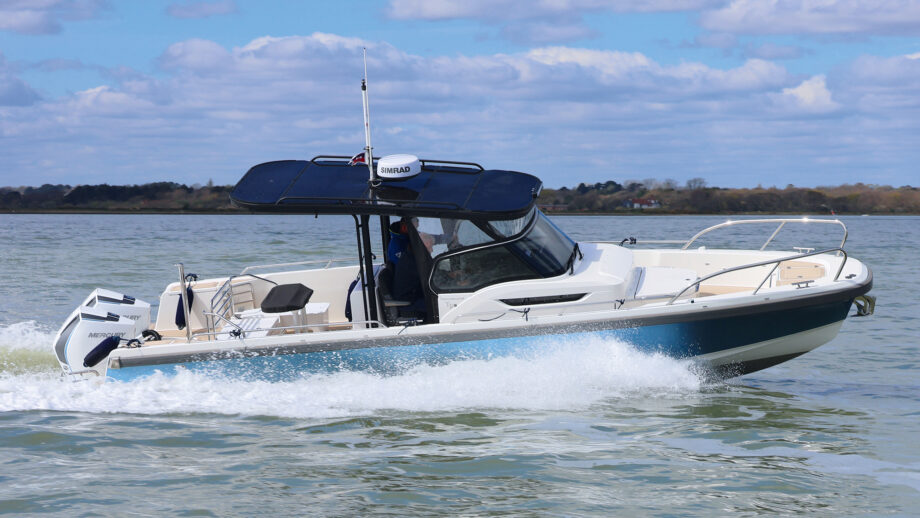
The proof of the pudding is in the eating and this particular dessert was one of those typical lumpy Solent days that would force most sportsboat owners to throttle back from 35 to 20 knots to give their vertebrae a rest. Andrew Millington, the owner of this particular Nimbus T9, kept the throttles planted and switched on the Seakeeper Ride system he had fitted to it last year.
I could feel the effect immediately. The continuous pitching of the bow was reduced in both size and severity while the side to side roll disappeared almost entirely. The result was a softer, safer, more controlled ride that allowed us to plough on at 35 knots without a second thought.
Given that the T9 has a very solid and seaworthy hull but not the softest of rides, the addition of Seakeeper Ride has proved to be genuinely transformative for Andrew and his family, encouraging themto use the boat far more than expected – they put over 140 hours on it last year.
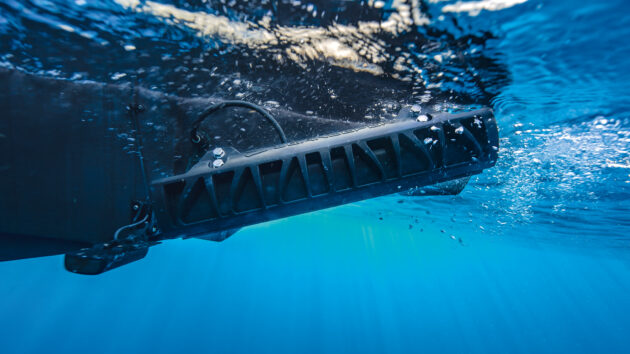
The rotating scoops are able to move much faster than trim tabs or interceptor blades
Trim Speed
The reason it’s so effective stems from the way the Seakeeper Ride’s trim control units operate. Like the interceptor blades made by Humphree, Volvo and Zipwake, they work by trapping a wedge of high pressure water in front of them that forces the main flow of water down and pushes the stern up, much like a pair of conventional trim tabs.
The difference is that rather than being flat blades, which extend down vertically from the transom, Seakeeper Ride uses horizontal scoops mounted behind the transom that rotate down into the water. This rotational movement means they can be moved up and down much more quickly than vertical blades or conventional trim tabs. Seakeeper claims that at 300mm per second they are around 20 times faster than Zipwake’s interceptors.
Combined with a 3-axis sensor that measures pitch, roll and yaw, a GPS sensor that monitors position and speed, and self-learning software that can make up to 100 adjustments per second, Seakeeper Ride can control the boat’s attitude as it drives up and down each wave. The boat needs to be planing at 17 knots or more for it to be fully effective but once up to speed it is said to reduce pitch and roll by as much as 70%.
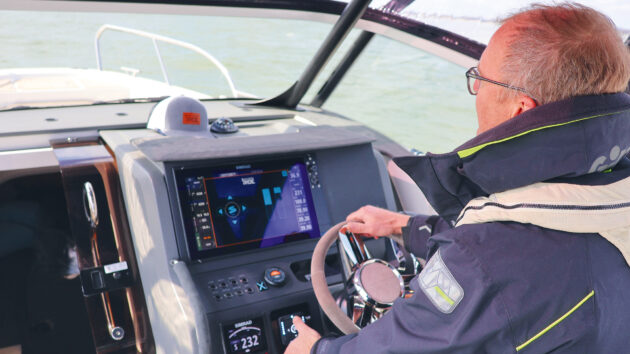
There is a manual override panel and an MFD app that shows what each scoop is doing but it’s usually better to let it control pitch, yaw, roll and trim automatically
Ride Comfort
To experience this myself, Andrew lets me take the helm. With Ride switched off, I can maintain a decent pace but the constant pitching is wearing and occasionally I can feel the bow being pushed off line by a rogue wave. All it takes to induce a list is for one of the passengers to swap sides or run the boat side-on to the wind.
Switching the Ride system back on immediately levels off the list, kills the yaw and reduces the pitching to more comfortable levels. It’s not going to turn a hard-riding, imbalanced hull into a magic carpet but it can certainly make the best of what’s already there and take the edge off uncomfortable sea conditions. Perhaps the biggest surprise is that it does this while feeling entirely natural to drive. You can still trim the engines up on the throttles for greater speed and efficiency or pile into a fast turn without the system trying to fight you – it simply maintains whatever trim or angle you set it to.
To see how quickly the blades were reacting, we opened up the Seakeeper App on the Simrad MFD to show their movement in real time. Even in this relatively modest chop the two bar charts showing the position of each blade was bouncing up and down like a DJ’s graphic equaliser. And while they were obviously working as a pair, one side would often dip dramatically lower than the other to counteract roll as well as pitch.
You can still adjust them manually, for example if you want to plant the bow even lower in a very rough sea, but for the vast majority of the time it’s better just to let the system get on with it.
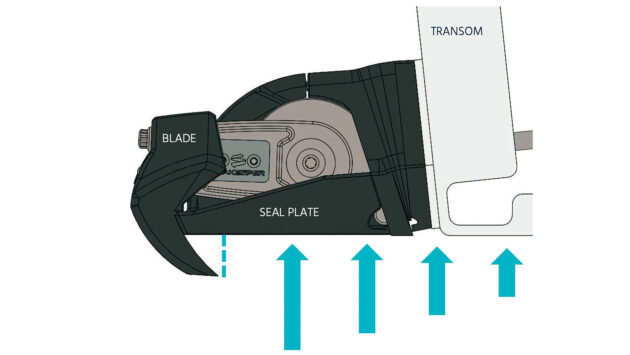
The scooped blade traps a wedge of water in front of it, forcing the main flow down and pushing the boat’s stern up
Verdict
Effective as most auto trim systems are at controlling list and trim, they often take a few seconds to sort things out, by which time either the boat’s attitude has changed or the person at the helm has made some adjustment to the boat’s speed, steering or trim angle.
Humphree’s Active Ride Control system does a very good job of keeping pace with this and until now has been our pick of the auto trim systems but on the evidence of this sea trial, the new Seakeeper Ride system feels like it has moved the game on yet again, delivering not just a flatter, softer, more consistent ride but one that needs almost no intervention from the skipper.
Deputy Editor Alex Smith came to much the same conclusion after testing a number of Finnmaster boats fitted with Seakeeper Ride at a recent sea trial event. His only misgiving was that it felt a bit heavy handed on one really quick boat at speeds in excess of 50 knots. This aside, it seems to be one of the most effective and user-friendly systems yet.
It’s not cheap – the set-up on Andrew’s boat cost around £10,000 including installation – and it hasn’t been around long enough for us to assess its long term reliability or resistance to fouling, but if it continues to perform as well as it did during this sea trial, expect to start seeing Seakeeper Ride on a lot more boats in future.
 If you enjoyed this….
 If you enjoyed this….
Motor Boat & Yachting is the world’s leading magazine for Motoryacht enthusiasts. Every month we have inspirational adventures and practical features to help you realise your sailing dreams, as well as tests and news of all the latest motorboats.
Plus you’ll get our quarterly Custom Yachting supplement where we share the last on offer in the superyacht world and at the luxury end of the market.
Build your knowledge with a subscription delivered to your door. See our latest offers and save at least 30% off the cover price.
Note: We may earn a commission when you buy through links on our site, at no extra cost to you. This doesn’t affect our editorial independence.