

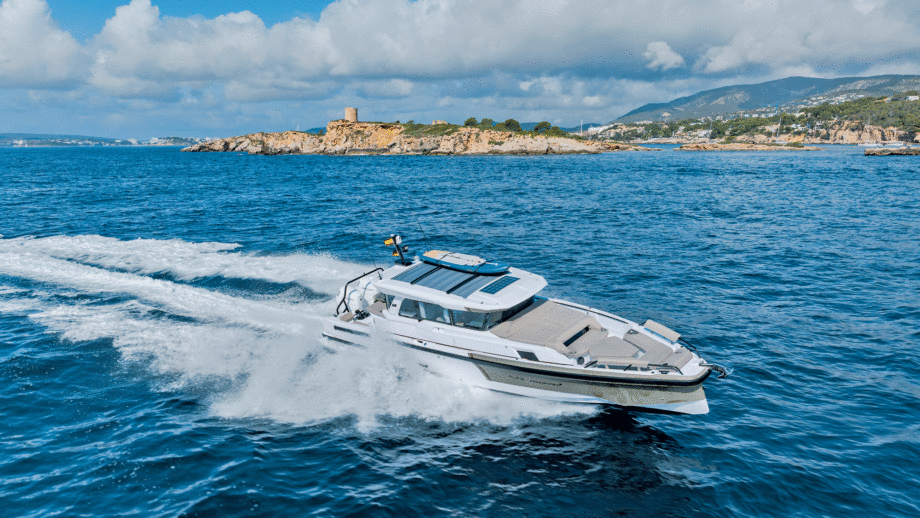
The Axopar 37 has been outrageously successful over the years. It was America’s best-selling boat in its category in both 2024 and 2025. It’s also sold well over 3,000 models in the last decade (nearly a boat a day) and it’s won dozens of prestigious awards to cement its reputation for calibre as well as popularity.
In fact, so game-changing has it been, both for Axopar and for the adventure sector, that it’s not far short of a modern powerboating icon. But it seems there’s a new kid on the block…
Following its world launch at the Düsseldorf Boat Show in January, the all-new Axopar 38 made its way to Palma for its first round of sea trials at the hands of the international press.
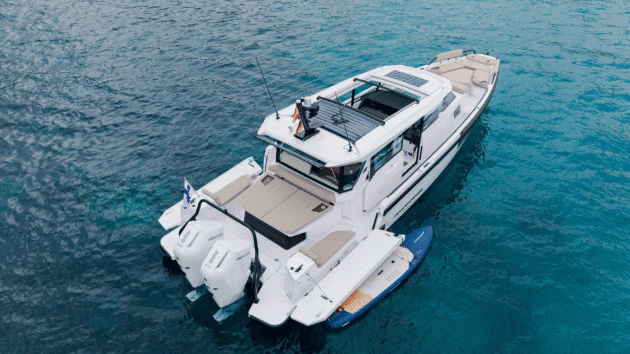
This boat commands dangerous, cheque-signing levels of appeal
And right from the start, the Axopar crew was at pains to stress that, for now at least, the new 38 will run alongside the all-star 37, rather than simply ousting it. That statement was met with a lot of raised eyebrows but when you investigate the finer details, the degree of difference between the two boats appears to make concurrent production broadly feasible.
The new boat is 1ft 2in longer than the 37, as well as 7in wider and 1,500kg heavier – and while the starting prices appear quite similar, the reality is that the specced-up package price enables the two (at least for now) to justify their respective places in the Axopar fleet.
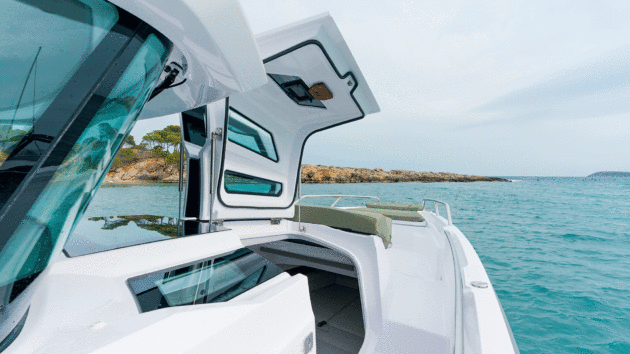
Whichever layout you pick, freedom of movement is first-class
Optimised layout
Aside from looking substantially larger than the 37, the 38 also uses a slightly loftier freeboard for increased security, plus a redesigned chine for extra bow lift and a more pronounced bow flare for a drier ride. The twin drop-down bulwarks (about €10,700 for the pair) are another step up over the 37, and they’re particularly unusual too.
When deployed, these manual units sit 18 inches or so above the water’s surface, enabling you to sit down and keep everything dry except your feet. They also create a neat little slot to tuck your paddleboard out of the way underneath.
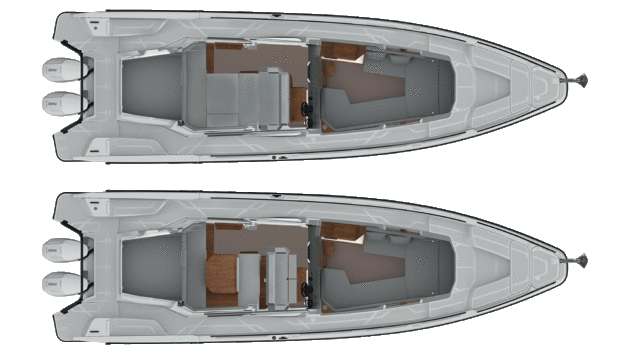
The 38 squeezes in three internal forward-facing benches
If you go for the optional lounge seats built into the two side modules, you also get a good spot to perch your bum on a cushion and gaze out to sea. And as on previous models, while these modules are great for the storage of lines and fenders, you can also spec the port one with a compact wet bar.
Another worthwhile option is the aft cabin. It offers a really effective second double berth, slightly sunken into the deck, plus a raised island sunbed that butts directly up against the pilothouse’s aft bulkhead.
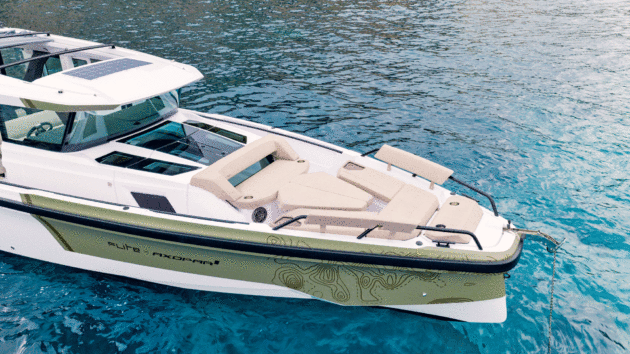
The test boat’s optional bow lounge is secure, comfy and easily converted into a sun bed
You can access it from the aft deck or from the port side of the internal dinette, behind a hinged cushion and footbrace. And such is its volume and quality that a great many owners might be tempted to use it as their permanent sleeping cabin, keeping the bow space rigged as a lounge instead.
The foredeck has a valuable option too – a bow lounge with U-shaped forepeak seating opposite a forward-facing bench. The table drops down to create a sunbed while keeping the deck open for you to make your way from side to side.
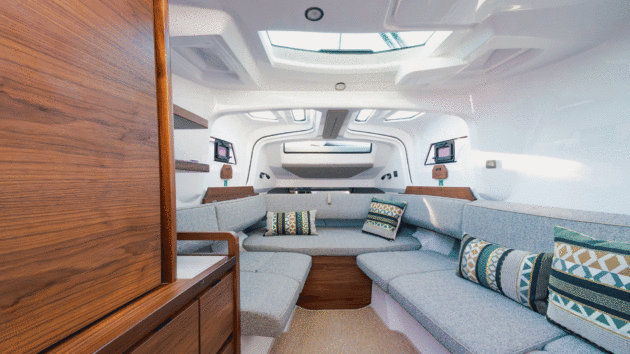
The amount of light admitted by the overhead skylights and gullwing doors is remarkable
There’s also a step-through bow and a pair of Axopar’s gullwing doors for extra light, air and easy access to the forward cabin. You can opt for a fixed island sunbed at the bow instead but it’s difficult to make a case for it when you see how well the lounge works.
As for the forward cabin itself, well again, the test boat shows it at its very best, with the optional port galley and enclosed starboard wetroom-style heads compartment.
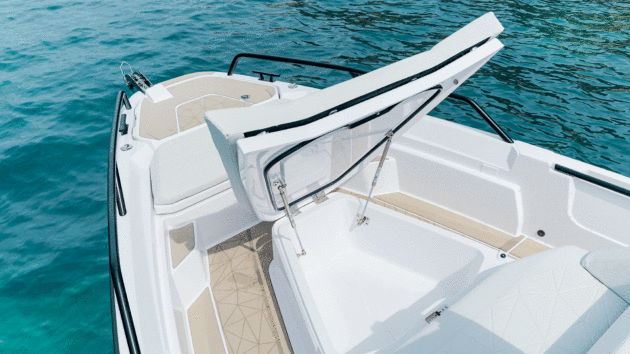
While the test boat’s bow lounge is a great way to use the space, there are options
What’s particularly cool here is that, when you swing open the heads door, you can lock it in place, draw a small curtain and divide the galley off from the forward part of the cabin so if there are people in bed, you can make breakfast without overlooking them. Whether you’re into day boating or weekending, the alternative loo-beneath-a-bench-seat feels a bit low-grade by comparison.
The bed itself is well proportioned for sleeping with your head aft, and when you lift the hinged cushion, it creates the backrest for a U-shaped lounge with a neat little swivel table in the middle. It’s a good spot for up to four people to separate themselves from the crowd, and those gullwing doors keep it as bright and open as you could want.
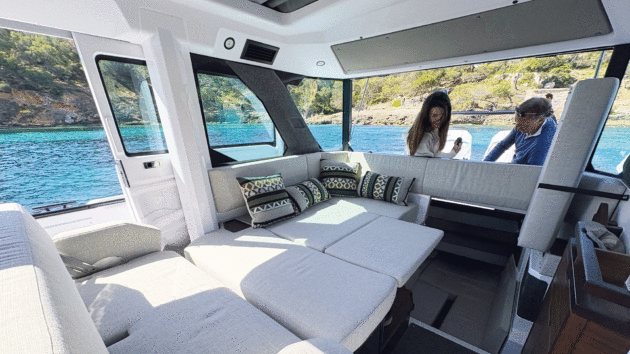
If you really want to put up extra guests, the dinette still converts into a third double berth
Storage of bulky gear might be a bit challenging if you’re travelling as a family of four or a pair of couples because the boat works so hard to maximise the usefulness of every inch that most of the dedicated spaces are for small items only.
But there is room for four backpacks behind the fold-out steps at the entry point for the gullwing doors; and such is the scale of the roofrack that you could easily whack a roofbox or two up there if absolutely necessary.
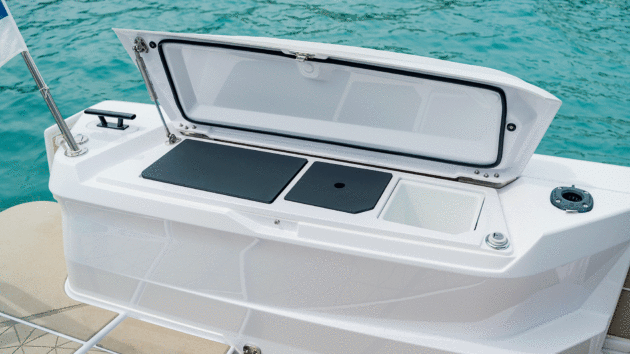
Even if you spec the lower galley, the port wet bar is well worth a look
What about the sea manners?
As we get underway, it quickly becomes clear that those more aggressive chines do a good job of elevating the bow. The idea is to soften the ride at 8-11 knots before you shift onto the plane, while also enabling you to enjoy a more effective running attitude in a following sea.
As intimated, that’s also helped by the extra splash deflection that comes with the expanded bow flare, and that dryness of ride is clearly evident at pace across the seas and into a head sea too. In fact, at no point in two days of F3 winds and 2-3ft swells do we take any water on board at all.
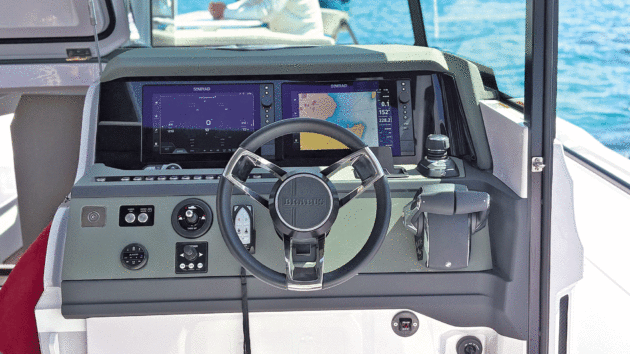
Almost impossibly narrow mullions mean amazing views
And while that’s impressive, it’s the ride softness that really marks out this new 38 as something special.
As an experienced boater, you naturally flex your knees and brace yourself when you sense an impact coming but there’s just no need. The re-entry is perhaps the softest we’ve ever experienced from a monohull of this length. In fact, it’s more akin to the ride of a well-sorted powercat than to that of a monohull – and for proof of that, you only have to check out the bow lounge.
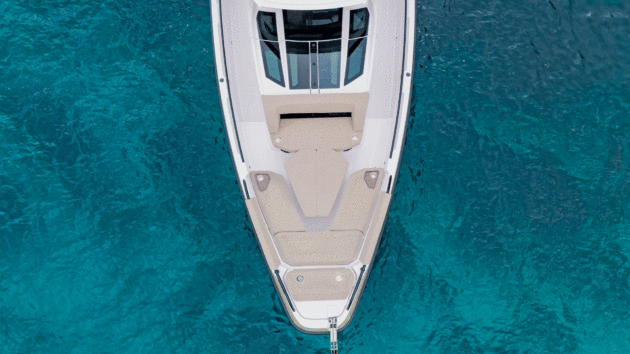
You can shunt the table forward and free up the transverse walkway
As the sea manners of the new boat begin to reveal themselves, various people (us included) begin sitting in the bow lounge in what are more commonly known as the suicide seats. And we’re not doing this in sheltered waters at 20 knots while holding on. We’re doing it on the open sea while a bunch of wide-eyed journalists push the boat to its 46-knot top end. It really is that soft, that dependable and that composed.
It’s also particularly brilliant for the singlehanded skipper, thanks to two wide side doors, long single-level side decks, a well positioned joystick, easy-reach rails and cleats and equally well-placed boarding steps on both sides. The fact that you can get in behind the skipper on the starboard side without displacing him from his seat is also particularly useful.
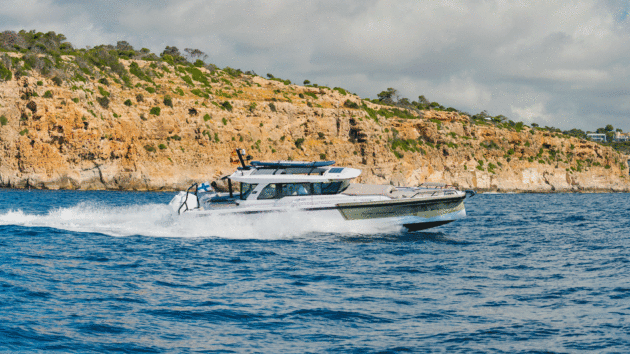
The ride is about as soft as you will find on a monohull of this length
But it’s worth talking about the driver aids here too because their impact is significant. With the auto tabs and trim assist both activated, the boat, though rigorously well behaved, doesn’t perform to its best in terms of speed and efficiency. When you take charge of those elements, lifting the tabs and raising the legs manually, you free up the hull, pushing the top end from 5,750 to 6,150rpm and the top speed from 43 to nearly 47 knots.
And the beauty of all of this is that, while Axopar’s classic twin-stepped hull delivers plenty of efficiency, its conduct is so beautifully controlled that you feel fully confident in pushing those boundaries. Safe to say then that this is a brilliant boat to drive, both for the complete novice
and for the seasoned boater.
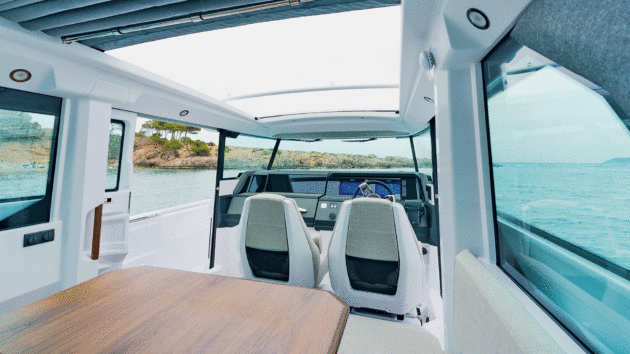
The dinette’s forward bench can be rigged to face ahead underway
That said, the new 38 might actually be better classified as a sporting GT than an outright performance boat – and not because it lacks in performance in any way, but because the traditional GT qualities are all there.
We’re seeing decent efficiency (3.3L per mile at 33 knots); long-legged range (in excess of 250 miles on the uprated 1,100L tank); outstanding levels of comfort (thanks to that extraordinary ride softness); and remarkable refinement (just 78dBA at 37 knots). Founding partner Jan-Erik Viitala reckons the 38 is the best driver’s boat Axopar has ever built and it’s tough to disagree.
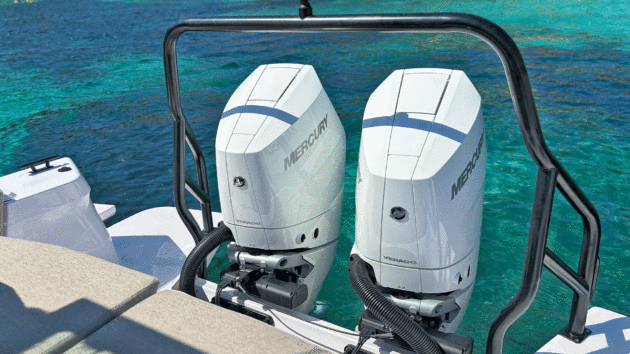
The V10 350s are faster, torquier and significantly more refined than the V8 300s
Article continues below…

Axopar 37XC review: Is this the ultimate paddleboarding/adventure boat?

Axopar 45 review: Full tour and test drive of the all-new €515k Axopar flagship
Options aplenty
Clearly, everyone will have their favoured options but for most people in most situations, the best package is relatively clear. Even in the heat of the Mediterranean sun, the XC model makes more sense than the Sun Top models, which, though slightly faster and with more in the way of genuinely open spaces for lazy days at anchor, can’t match the XC for sheer flexibility of application.
This boat provides proper year-round shelter, as well as air-conditioned respite from the sun; and the huge sunroof, wide side doors and hinged aft window enable you to open it up to an impressive degree when you do want to enjoy the great outdoors.
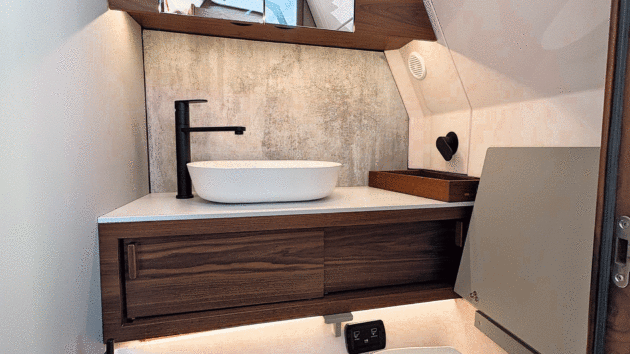
The optional day heads comes with a shower
It also makes far more sense to have the bow lounge than the sun bed, because it gives you a secondary socialising zone plus convertible sun beds when you need them, and all without critically impoverishing the space in the bow cabin.
And the test boat’s aft cabin makes more sense than the wet bar or the aft bench because it gives you a second cabin, plus a great place to sit in the lee of the superstructure underway. It also helps make the most of the optional opening aft window, while helping reduce noise at sea and providing a brilliant spot for stowage of bulky weekending items if you don’t intend to sleep in it.
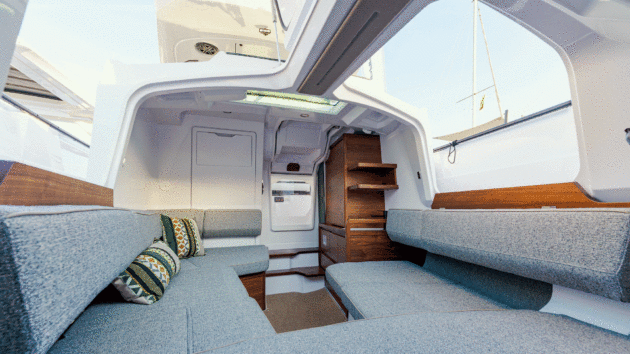
You would do well to trade the basic seat-heavy layout for the test boat’s port galley and starboard heads
Similarly, the separate heads compartment seems to make a great deal more sense than a load of additional lower deck lounge seating because, whether you choose to opt for the day boating Sun Top or the cruise-friendly Cross Cabin, privacy on the loo is a critical part of any genuinely happy boating experience.
And while we’re talking options, the 350s also make far more sense than the 300s, because they give you 6 knots more at the top end, plus much more torque for load-carrying and watersports, alongside a more generous cruising band.
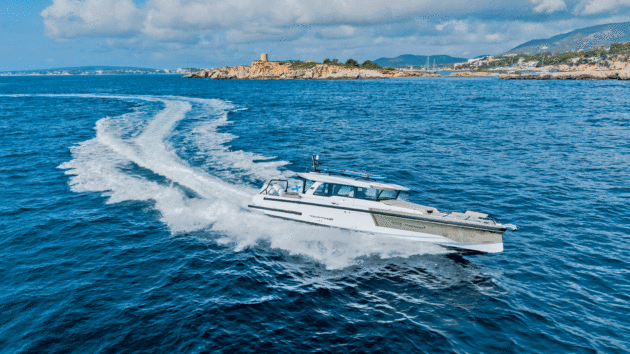
The redesigned hull has a little extra bow lift and increased flare to reduce the chance of stuffing it when running with the seas
They’re also quieter and more refined on passage. So there you have it. The test platform had all of these things and, while we had another three variants of this boat over two days in Palma, each with a whole raft of different options, it struck us this was by far the best way for the 38 to operate at the peak of its potential.
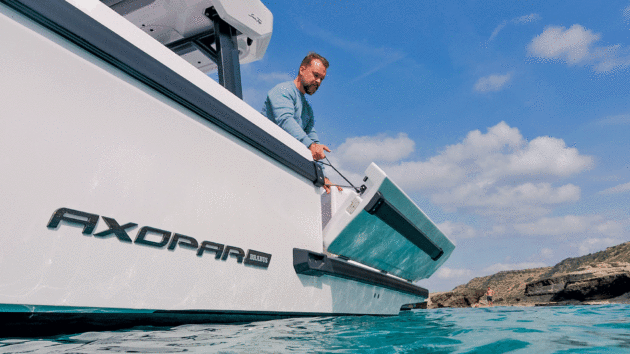
Elevated terraces keep feet dry and unused inflatables neatly tucked away
 If you enjoyed this….
 If you enjoyed this….
Motor Boat & Yachting is the world’s leading magazine for Motoryacht enthusiasts. Every month we have inspirational adventures and practical features to help you realise your sailing dreams, as well as tests and news of all the latest motorboats.
Plus you’ll get our quarterly Custom Yachting supplement where we share the last on offer in the superyacht world and at the luxury end of the market.
Build your knowledge with a subscription delivered to your door. See our latest offers and save at least 30% off the cover price.
Note: We may earn a commission when you buy through links on our site, at no extra cost to you. This doesn’t affect our editorial independence.
Price as reviewed:
£313,074.96 As tested ex. VAT
Verdict
If you really are undecided as to whether you should opt for the superb cruise-ready XC model or the dayboat-centric Sun Top platform, then don’t despair. True to form, Axopar is set to follow up this initial launch with a Cross Top variant at the Cannes Yachting Festival. By adopting the open configuration but with uprated shelter from a more substantial wraparound XC-style screen, it ought to straddle the gap between the two models quite nicely. In the meantime, rest assured that this new 38 isn’t just an Axopar stepping stone that preaches to the converted and tempts 29 and 37 owners to reopen their wallets. It’s a boat that commands dangerous, queue-forming, cheque-signing levels of appeal to anyone with even the faintest interest in boating.
Details
LOA: 11.86m
Beam: 3.53m
Draft: 1.10m
Displacement: 5,300kg
Fuel capacity: 830L
Water capacity: 200L
Engines: Twin Mercury V8 300/V10 350hp outboards
Top speed with test engine: 46.6 knots