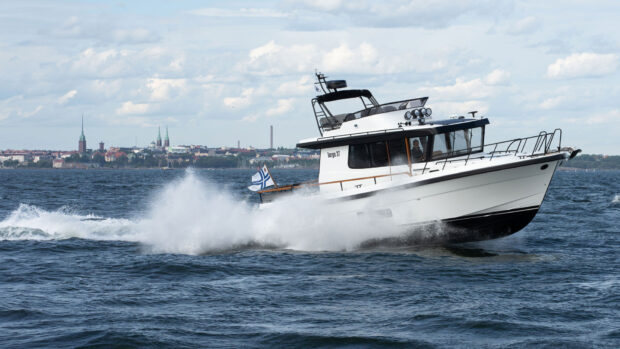

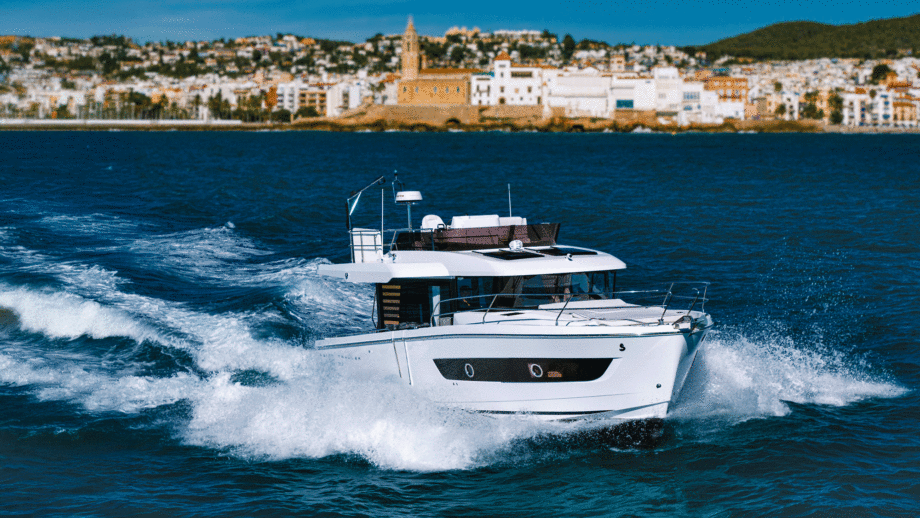
Bigger, better, cooler, cheaper. Can the new baby Beneteau Swift Trawler 37 Fly really be that good?
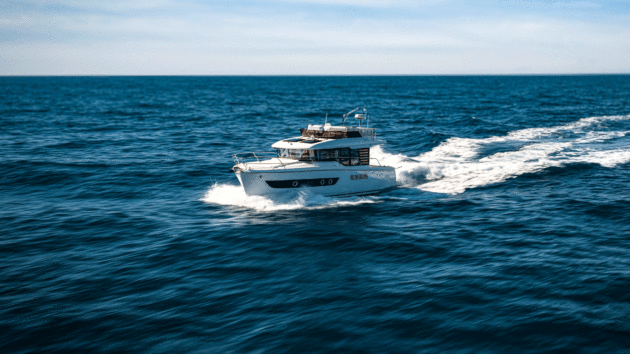
You don’t expect a trawler-style boat to look especially pretty but this one really is. The Beneteau Swift Trawler 37 Fly may be the same length as the Swift Trawler 35 it replaces (37ft 0in) but thanks to a longer, lower superstructure, a taller foredeck and a one-piece reverse screen, it looks better balanced.
Factor in some generous glazing, both in the hull and the wheelhouse, and you have one of the best looking trawler yachts below 50ft.
And if the styling hits the mark, so does the price. It starts from just €299,000 for the Sedan model or €315,000 for this flybridge version, which is less than the boat it replaces. In short, as we approach the new Beneteau Swift Trawler 37 Fly at its berth in Barcelona for our highly anticipated sea trial, it’s off to a flying start before we’ve even stepped on board – and the good news keeps coming when we do.
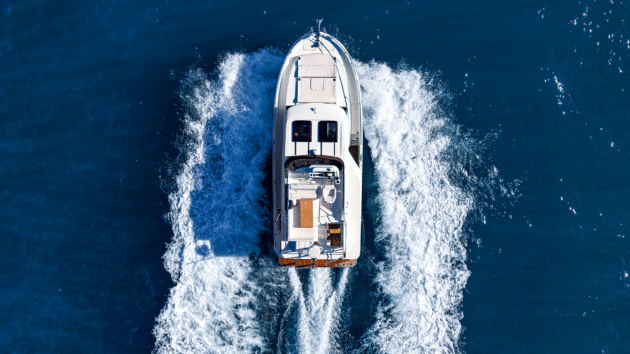
You can increase the range to around 500 miles at 6 knots
Beneteau Swift Trawler 37 Fly: Cockpit and flybridge
The aft cockpit comes as standard with a pair of simple corner seats, each containing space for a large gas bottle to supply the standard two-ring gas stove for long spells away from home.
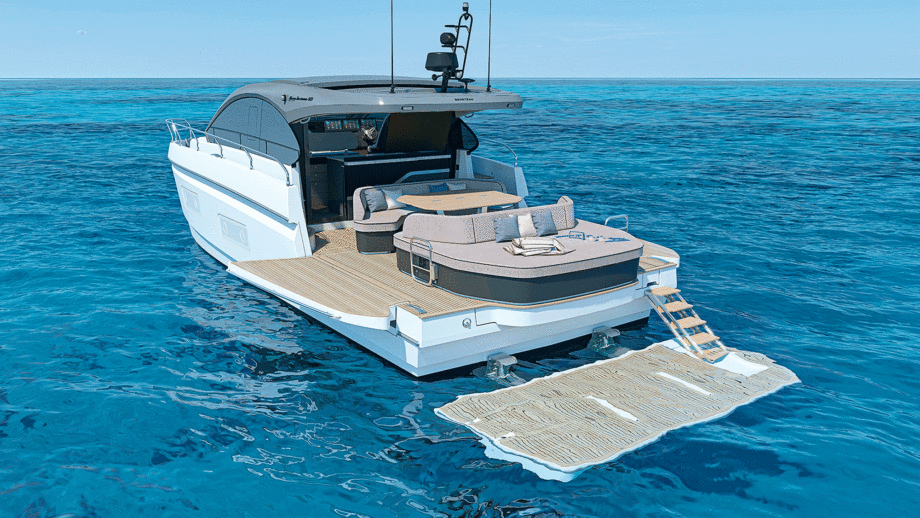
Given that this boat, like the larger models, is designed as a proper liveaboard platform, that makes good sense. Here though, the transom rail between these two pods is replaced by an optional aft bench module. That adds plenty of extra storage and the fact that it can be pushed back over the swim platform helps free up a decent bit of deck space for freestanding furniture too.
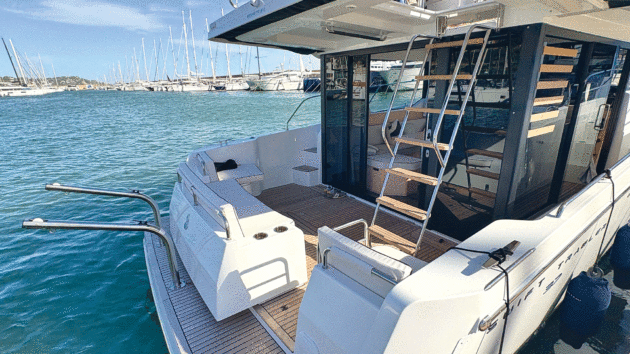
Even with the optional bench module slid aft, there’s still room to operate the davits
There’s still room on the aft platform for a couple of davits to wield a 2.3m tender without getting in the way of the starboard gate and the rest of the cockpit arrangement is equally well managed.
The Flybridge ladder uses a simple hinge mechanism so you can tether it tight against the back end of the pilothouse when you need extra space. But even with it screwed to the deck at a shallow angle, there’s still room to open the big lazarette unimpeded.
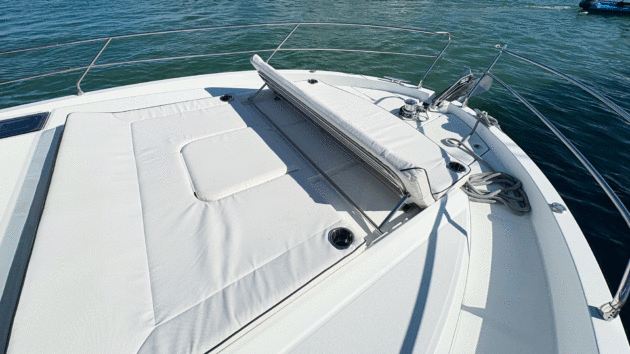
A simple lifting backrest makes a big difference to the usability of the bow
In the absence of Beneteau’s ‘fashion panel’ struts, there are no doors at the back ends of the side decks to keep the cockpit protected from the wind at anchor. But you can achieve the same thing with canvases instead and here, as in the saloon, there’s an excellent handrail built into the underside of the flybridge overhang to help you move about in safety.
The port dinette can be rigged as a double and cordoned off with the integrated privacy curtain
Up on the flybridge, the port dinette uses a reversible forward backrest so a couple of people can keep the skipper company. There’s also an optional fridge in the aft end of the unit plus plenty more storage and a power point so you can plug in a portable grill or raclette and have a sociable meal up top.
That’s a handy touch, given that there is no option for a wet bar, and it’s a practical space in other ways too. The reverse screen, for instance, creates extra rooftop space ahead of the deflector, which you can use either for a pair of skylights or for a solar array to help improve your autonomy at anchor.
The multi-function co-pilot seat really couldn’t be better
There’s also a ready-rigged bimini folded flat to the deck ahead of the helm, plus a steel rack for your paddleboards at the aft end. And even on this fly-equipped model, a folding radar mast and a pull-out manual lifting davit enable you to reduce your air draft to sneak under low bridges.
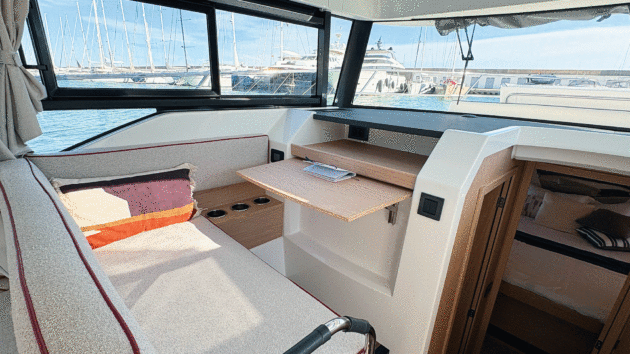
The co-pilot seat operates as a desk and a transverse lounger
The fact that the furniture up here is modular rather than moulded is also very useful. It means Beneteau can simply sweep it all away to create the Sedan model. That’s partly what enables them to keep the price so low and they’ve gone further with the concept too.
Pick the Sedan with the Active Lifestyle package and you get a set of D-rings and straps so you can use the entire roof space as a storage depot for your toys. Spec it for the Relaxation Lifestyle instead and you get a bimini and a set of loungers for lazy rooftop gatherings.
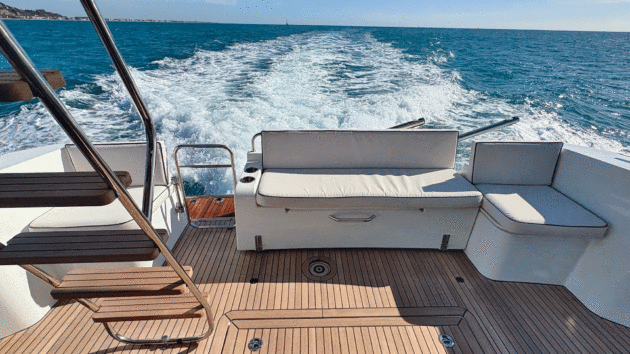
The two corner seats double as large gas lockers for extended periods away
Clever saloon
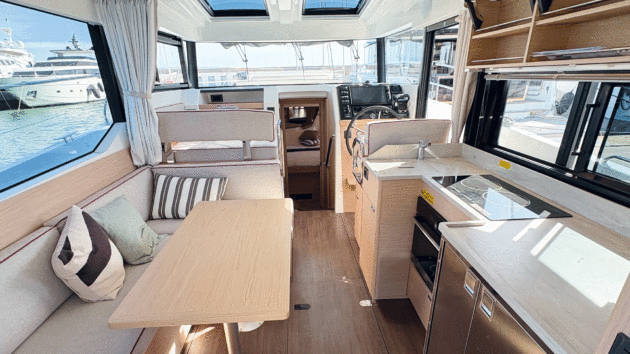
Step into the saloon and it’s clear that the raised bow shape means you get no view forward from the port dinette. But this is mitigated partly by the big port side window and partly by the positive things that the saloon does do. For instance, the dinette itself can be converted into a large double bed and cordoned off with a privacy curtain that tucks neatly into a corner when not in use.
In terms of finish, as well as spatial flow, it’s an extremely pleasant place to be
And ahead of that, the raised two-man co-pilot seat steals some very worthwhile design ideas from the Marex 440 and 390. A lateral cushion enables you to stretch out and face inboard with your feet beneath the raised armrest. There’s also a lift-up desk here, plus some storage and a power point, so you can conduct
some chartwork or use it as an office with a view.
The galley is also very pleasing. While the 35 used a forward galley, making high-level storage impossible, the 37 runs a larger galley further aft on the starboard side. It uses a corian worktop (rather than laminate) and it’s really good to see a shallow cutout that enables you to ease yourself out of the way so people can get past along the central walkway.
There’s another sliding window for ventilation, plus a TV that folds out from a cabinet to face the dinette. And the test boat also trades the standard 130L fridge and wine rack for a much more accommodating 150L fridge and 50L freezer, both tucked away beneath the worktop.
The view aft is pretty good
As you would expect of a liveaboard boat, access to the engine is good too. There’s a large hatch in the deck between the galley and the dinette; and if you need extra space, you can remove the table and the aft seat pod and open up a second hatch to port. When you get down there, you find yourself confronted with a single inboard diesel on a straight shaft – in this case, a bulletproof Yanmar 6LY 440.
That’s all great, particularly as this boat eradicates any single-shaft handling concerns with a pair of Sleipner proportional thrusters. But of course, on a compact boat with an inboard diesel on a straight shaft, the space left over for your accommodation is inevitably quite restricted, so it’s high time we popped down below…
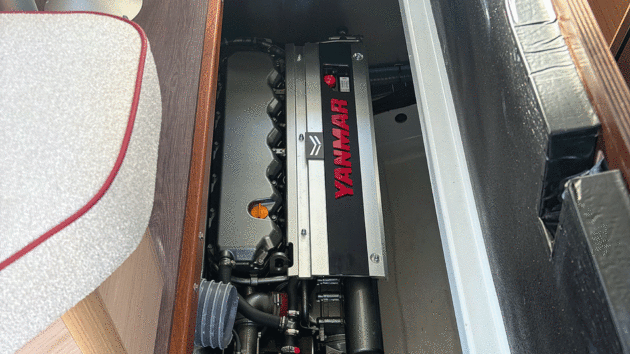
As a single shaftdrive, the Yanmar diesel sits within easy reach beneath a saloon hatch
Article continues below…
New Boats at Dusseldorf: Beneteau GT50 – Inside this Japanese-inspired design
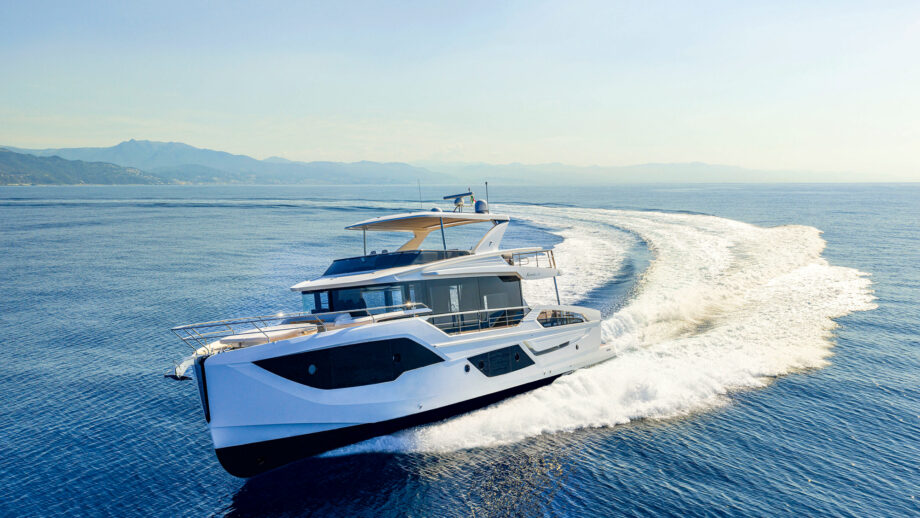
Absolute Navetta 62 review: Trawler functionality meets modern Italian flybridge style
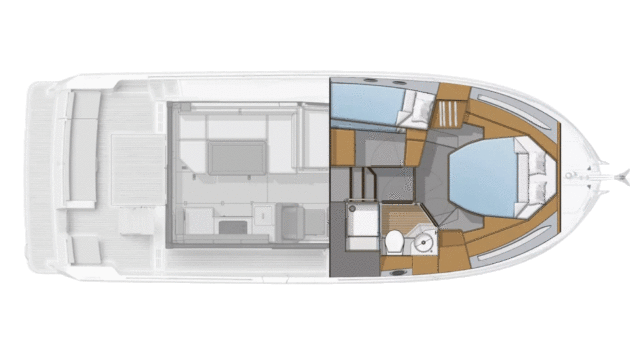
Two-cabin lower deck
By carrying the beam a good way forward, using large hull windows and elevating those bow mouldings, the lower deck of the ST37 is actually much better than you might imagine. The owner’s cabin, in particular, feels significantly bigger and brighter than that of the 35 and, unlike the 35, it gets direct access to the starboard bathroom.
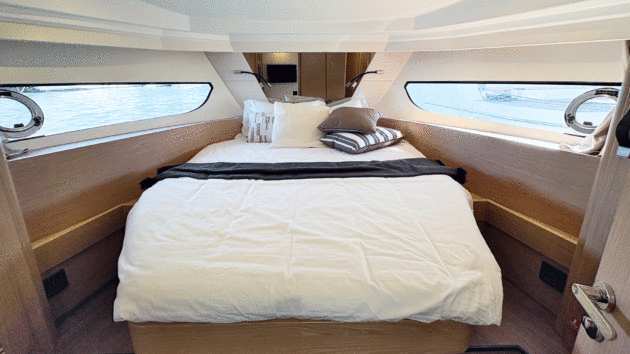
The Luxe pack adds leather handles, posh carpets and fabric bulkhead linings
This is, of course, used as the day heads too but the volume in here is excellent, with space not just for a vanity unit and a separate electric toilet as standard, but also for a dedicated shower compartment with a good size of seat and direct access to the pumps behind a waterproof hatch.
Over on the port side, space constraints mean that the guest cabin is a bunk room rather than a twin but it’s a very well used zone of the boat. There’s a roof hatch for extra light and air, plus a couple of portholes, plenty more storage and lots of headroom.
There’s also a reading light with built-in charging point, plus a little tray for your cup of tea. But if you want to use the 37 as a couple’s cruiser, rather than a family boat, you can do away with the mattresses in the guest cabin and use the bunk structure as shelves for a whole rack of storage boxes. In fact, Beneteau has designed this bunk room with precisely that in mind so it’s actually more versatile than it looks.
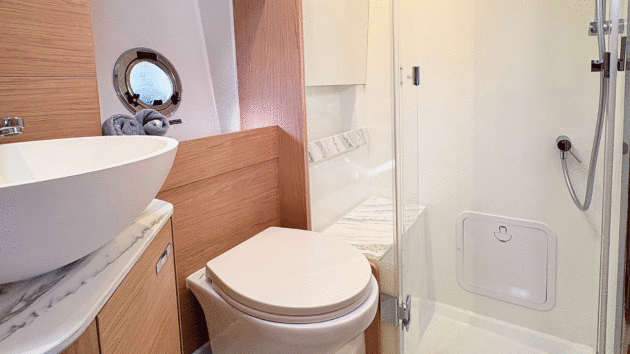
The sole bathroom can be accessed directly from the bow cabin
The quality’s good too. The doors use magnetic catches to avoid snagging shirts in tight spaces. The cleats and rails are all stainless steel rather than aluminium, and the wood veneers in here are 2mm rather than 0.6mm.
The fact that the test boat features the Luxe Pack also gets you slatted door vents, leather handles and plusher carpets, plus extra mirrors and fabric bulkhead panels, so in terms of finish, as well as spatial flow, it’s an extremely pleasant place to be.
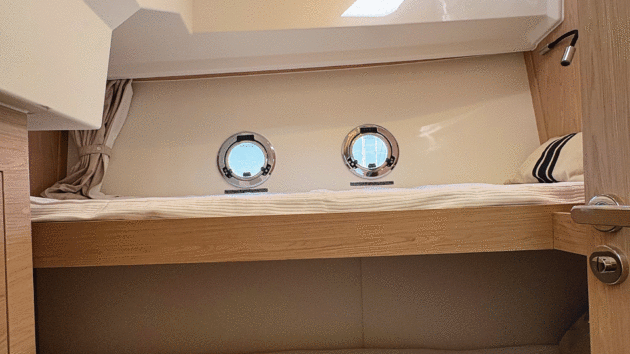
The second cabin takes the form of a storage-ready bunk room
A simple drive
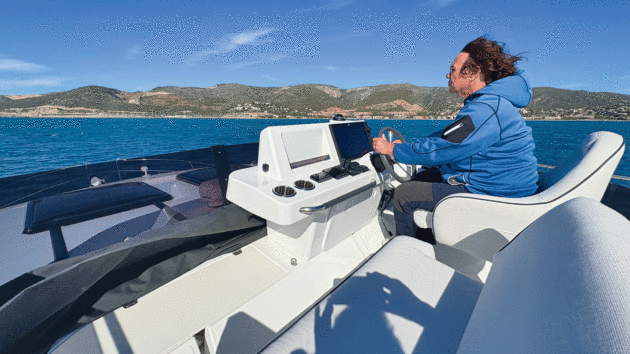
Thanks to the big reverse screen, the lower helm station is as good as you will see on a small flybridge-equipped cruiser.
In addition to volume and vertical height, you get a pair of optional sunroofs for fresh air and natural light plus a superb all-round view. A big skipper’s door and side gate make single-handed work a doddle. The ergonomics are equally impressive, thanks to a fold-down platform to increase your height and a dedicated plinth for the throttle and tabs.
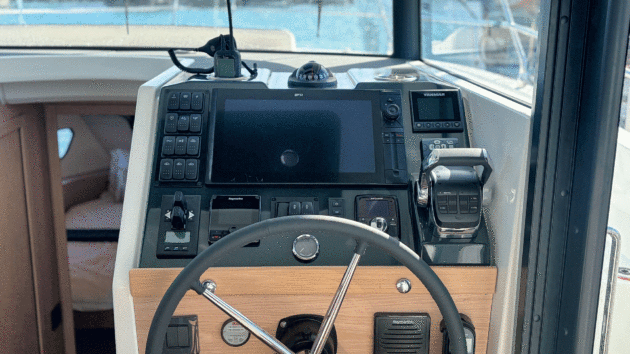
A yacht-style wheel is par for the course on a Swift Trawler
Head up top and the flybridge helm is also strong. It’s big enough for a pair of 16in plotters plus every other bit of gadgetry the lower helm enjoys; and the fact that the stairwell sits behind you means you get a direct view of the transom as you reverse into a berth.
In terms of the drive, there’s always a chance that an inboard diesel rumbling away beneath the saloon deck will prove a shade intrusive but at no point at all do we register more than 80dB.
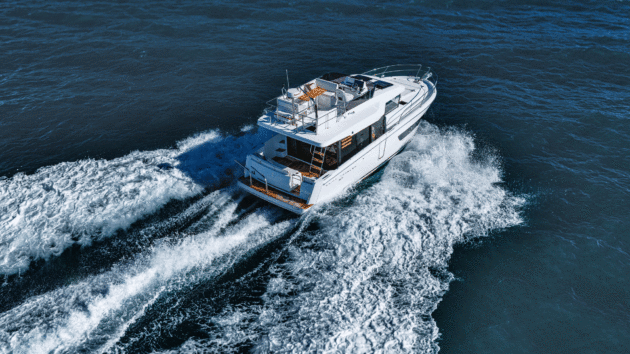
The 37 really is bigger, smarter and prettier than the outgoing ST35
As you would hope, it’s relatively affordable to run too, as long as you treat it to sensible speeds. At 5 knots, 1-litre per mile delivers a range in excess of 600 miles. That increases to 2lpm at 7 knots, 4lpm at 10 knots and 5lpm at the 17.6-knot top end, so it’s simply a case of picking the speed you’re comfortable with. It also illustrates that if you want to load up the boat with extras, it’s worth upgrading the engine from the standard 400hp to 440hp.
As for the helming experience, all is good in a very modest and compliant sort of way. Our only concern is the lack of a stabiliser, as these semi-displacement Swift Trawler hulls do have a tendency to roll a bit in a swell. At 37ft with a fully loaded displacement of nearly 11 tonnes, you might need a Seakeeper 4 rather than a Seakeeper 3 but there’s potentially space for that in the lazarette aft of the engine bay.
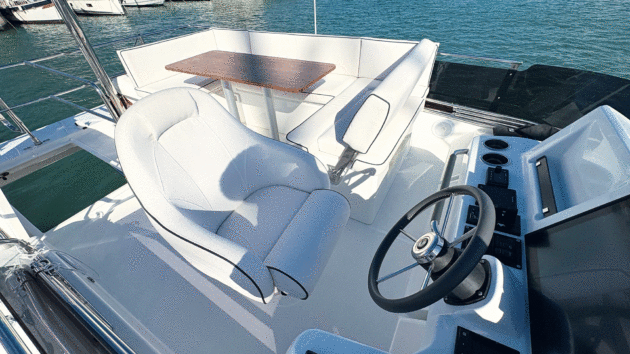
In the absence of a wet bar option, there’s a power point so you can use a grill or a raclette
While the 4 weighs the best part of 340kg, you wouldn’t imagine it would cause a critical issue – but either way, we’re assured that a gyro is not on the options list, so if it’s vital for you, you’ll need to investigate the retrofit possibilities.
 If you enjoyed this….
 If you enjoyed this….
Motor Boat & Yachting is the world’s leading magazine for Motoryacht enthusiasts. Every month we have inspirational adventures and practical features to help you realise your sailing dreams, as well as tests and news of all the latest motorboats.
Plus you’ll get our quarterly Custom Yachting supplement where we share the last on offer in the superyacht world and at the luxury end of the market.
Build your knowledge with a subscription delivered to your door. See our latest offers and save at least 30% off the cover price.
Note: We may earn a commission when you buy through links on our site, at no extra cost to you. This doesn’t affect our editorial independence.
Price as reviewed:
£273,345.97 As tested, ex. VAT
Verdict
It’s all true. The new Swift Trawler 37 really is bigger, smarter, better finished and prettier than the outgoing ST35. But as you might expect, that’s not the whole story. While the flybridge model starts at €315,000, the high-spec test boat comes in at €516,800 – a hefty 64% increase on the basic package price. More to the point, the new boat has only one permanent double cabin; and there’s no option for either a wet bar on the flybridge or a stabiliser. If these things represent a problem for you, you’ll need to ignore the Swift Trawler 37 and continue your search elsewhere. If, on the other hand, you’re happy to live without them, then this is a truly stellar piece of work from Beneteau.
Details
LOA: 37ft 0in (11.29m)
Beam: 13ft 2in (3.98m)
Draft: 3ft 10in (1.17m)
Displacement: 8,302kg (light)
Fuel capacity: 800L
Water capacity: 300L
Engine: 1 x Yanmar 400-440hp