
From predicting swells to the art of the throttle, experiencing rough water first-hand transformed confidence and cruising window. Tim Steel hones his skills with a proper rough-water test
A smooth sea never made a skilled sailor”. There is so much truth in this well-known proverb. It reminds us that in life, true strength and skill are more often formed in adversity than on the easy path. That said, I feel I should clarify a couple of things.
Firstly, I do not regard myself as a skilled sailor but I do love to learn. And secondly, I fully appreciate that most of us, including Annette, Joe and me, much prefer calm seas to rough for our boating fun.
Even so, a key reason we bought Iolar, our Dale Classic 37, was for her exceptional seakeeping. This is due, in large part, to her underwater profile, which is derived directly from the legendary Nelson pilot boat lineage. The idea was not to battle the high seas for fun, but to extend our cruising windows, allowing us to go further and with greater confidence. And therein lies the rub. Having bought a boat that is so capable, the only way to realise the benefits was to develop the right skills, and that meant I needed to experience some unpleasant conditions first-hand…
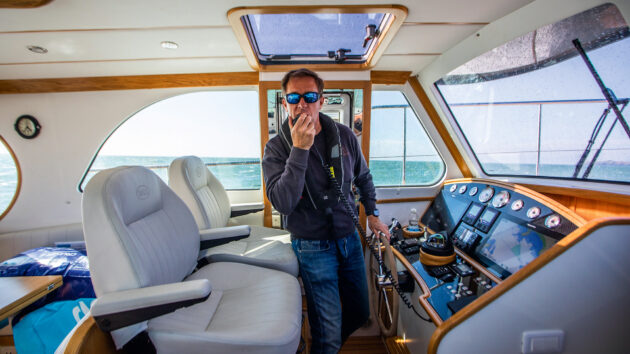
Seasoned skippers use a variety of sources to gauge the likely severity of the sea conditions
Boat & crew
My first sea trial on Iolar, accompanied by Mike from Dale, was a 65nm trip around the islands off Pembrokeshire in conditions I would probably not have ventured out in on my previous boat. The ease with which she coped was astonishing – it was actually enjoyable and comfortable and that was despite having no helm seats at that stage!
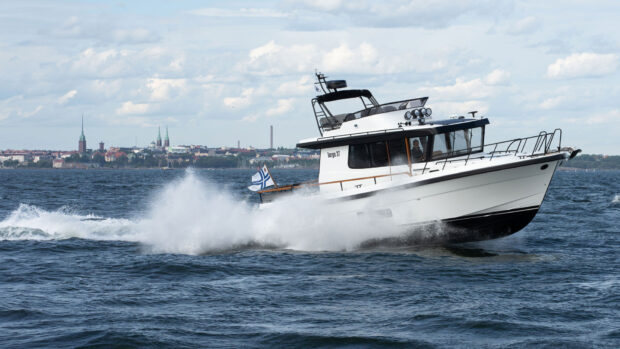
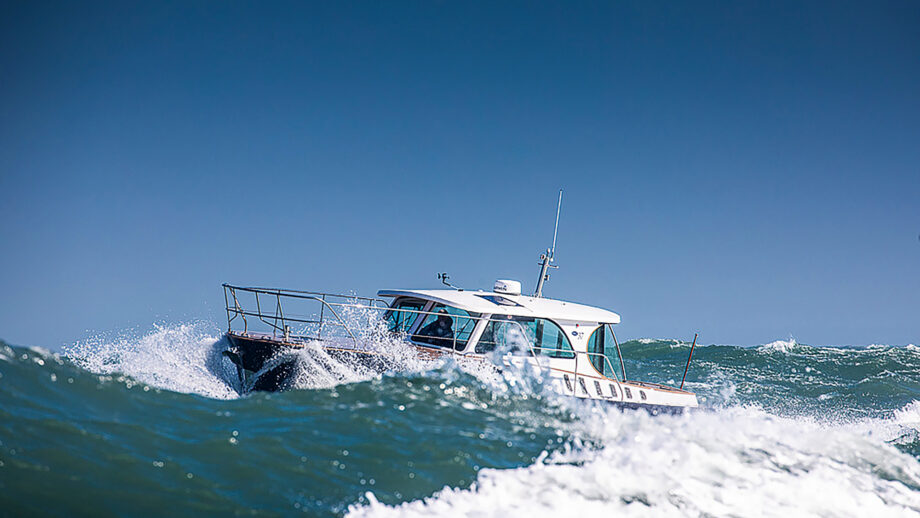
Next came an autumnal rough-water training session (again with Mike) off St Anne’s Head. Annette and I both helmed in waves from 3-4m and started learning how to manage Iolar, even though it felt more like she was looking after us. Under the guiding hand of Mike, our competency grew.
Iolar is strong. Her hull is built to RCD Category A and she has plenty of power available. The way she handles steep and confused seas without slamming is difficult to describe. Even if you carelessly launch all 12 tonnes of her off the top of a large steep wave (which I confess I have done a few times) you get a thud rather than a crash. Experiencing how she handles different conditions has built our confidence in her as a boat.
However, the crew are even more important. Nobody wants to be scared so we operate on the principle that there is nothing wrong with staying in port or turning back. I’ve also learnt that helming in rough water is tiring so being able to share duties on a longer passage is vital. lessons learned I tend to obsess over trying to predict the sea and weather conditions but in the end, I accept you don’t know what you’re dealing with until you’re there.
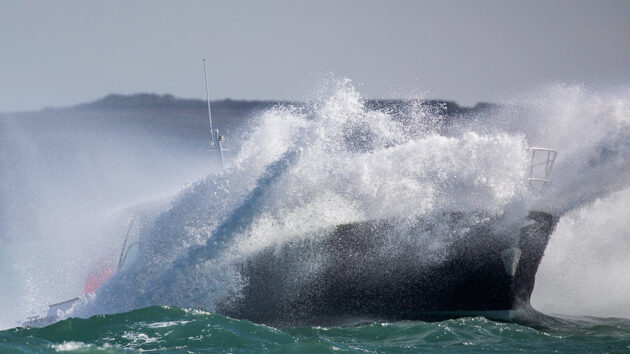
Dale’s semi-displacement hulls are derived from the legendary Nelson pilot boat
I use apps like Predictwind and Windy, plus my tidal atlas, as well as live wave buoys (accessed through Surfline) and even the occasional call to an NCI station. In fact, on a recent trip, we were approaching the Lizard, returning from the Scillies with a decent following sea. A quick call to Lizard NCI confirmed it was “pretty bad” close in but four miles out they could see a ferry passing in more settled conditions – job done!
We’ve also learned to assess the conditions as we go and to change our plans whenever necessary – and honest communication is an essential part of that. On a trip back from Kilmore Quay in Ireland, I was fortunate that my crew was an experienced skipper from Dale.
We set off into a steep head sea with waves up to 3-4m. Backed off to 8 knots, throttling up and down each wave, we were in for a long trip. We discussed how we felt and each agreed we could manage the conditions. Then we assessed if things could get worse or better.
Confident that they ought to improve, for a number of carefully considered reasons, we jointly agreed to keep going. in the event, we were proven right, arriving safely in Wales just a few hours later. It was a satisfying trip and another valuable learning opportunity courtesy of a very experienced skipper.
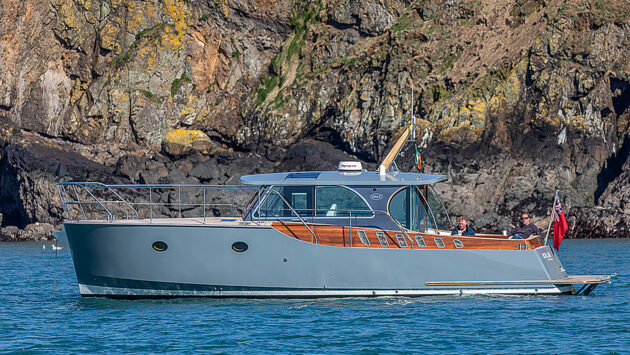
lolar at anchor in more tranquil conditions
Rough water tips
I had read books and articles that talked about the importance of throttle control in rough water, but it wasn’t until I was in big seas myself that I fully appreciated just how fundamental using the throttles is in keeping control. Another common trait of the experienced skippers I’ve been lucky enough to learn from is their ability to stay calm. It’s a vital attribute for maintaining focus in tough conditions, but it’s also about keeping the crew confident and assured.
You have to understand your equipment too. When conditions are not great, particularly during the winter months, we always have our lifejackets on and wet weather gear close by; and we also carry a six-person valise life raft. It’s ready to go in the wheelhouse, together with our grab bag, which includes flares, a portable VHF and an EPIRB. It’s also become second nature now to monitor AIS and radar, while also keeping a look out for potential hazards.
I’m certainly not advocating boating in dangerous conditions. However, experiencing conditions that have pushed me out of my comfort zone, and spending time with experienced skippers, has been hugely rewarding. In addition to learning new skills, you get a tremendous sense of achievement arriving at a new destination, as well as more confidence as a family to go further and see more. And if we get caught out by conditions, we know we have a very capable boat, plus a bank of experience to draw on when panic may otherwise have been the natural reaction!
 If you enjoyed this….
 If you enjoyed this….
Motor Boat & Yachting is the world’s leading magazine for Motoryacht enthusiasts. Every month we have inspirational adventures and practical features to help you realise your sailing dreams, as well as tests and news of all the latest motorboats.
Plus you’ll get our quarterly Custom Yachting supplement where we share the last on offer in the superyacht world and at the luxury end of the market.
Build your knowledge with a subscription delivered to your door. See our latest offers and save at least 30% off the cover price.
Note: We may earn a commission when you buy through links on our site, at no extra cost to you. This doesn’t affect our editorial independence.