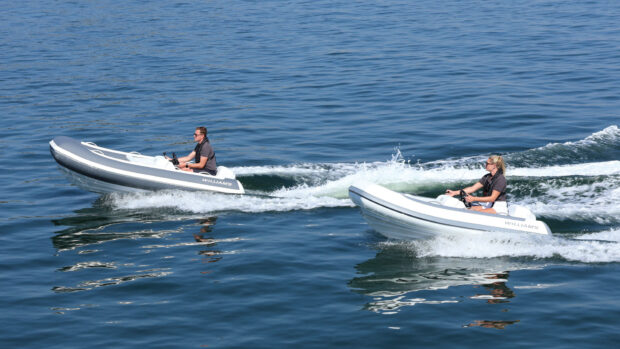


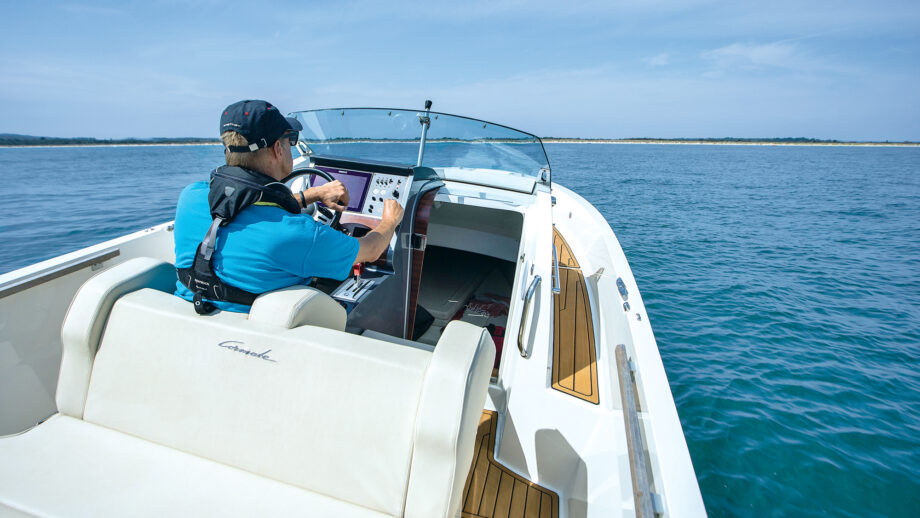
Jon Mendez returns with his expert boating advice. This month he covers off trimming your boat correctly to give you the smoothest, most efficient ride
Trimming your vessel correctly is vital for comfort, economy, seakeeping and ultimately safety. Good boat hull design usually requires very little trim from the helm to keep the ride comfortable. However, having the ability to affect the trim both fore and aft as well as side to side is great for altering the attitude of your boat to the sea.
In a perfect world as you accelerate your well designed, perfectly balanced boat to its planing speed, the shape of the hull will naturally lift it onto the plane, allowing it to skim over the top of the water with the boat’s weight supported evenly on the surface.
However, a boat’s weight doesn’t always remain constant; adding passengers, fuel, supplies and kit all change that perfect balance. Additionally, sea conditions also affect how your boat rides; calm seas being ideal.
Anything from a Force 4 upwards (or less in a small boat) will change the comfort and sea keeping of that perfect balance.
The same holds true for direction of travel; going upwind means you are facing steeper wave faces, going downwind risks dropping the bow into deeper troughs, and beam seas can cause the boat to list away from the waves or lean into the wind due to the counter steer you apply to stop being blown off course.
Short of shifting weight around, there are two main ways of trying to recreate that perfect trim scenario. Outboard and outdrive craft have engine trim buttons, usually on one side of the throttle handle, that allow you to alter the angle of the drive/thrust.
This allows you to raise (trim up) or lower the bow (trim down) to try and keep it at its most efficient. However, this does not allow much lateral trim even with twin engine installations.
Article continues below…
How to drive a motor boat with a stepped hull

How to navigate overfalls in a motorboat: 6 top tips
Shaft and pod drives don’t have the ability to trim the propeller’s angle of attack, so they (along with many outdrive and some outboard boats) are usually fitted with trim tabs or interceptor plates on either side of the transom at the base of the hull.
They work by increasing the pressure as they are lowered into the water, which in turn creates lift. The more you trim them down, the greater the lift on the stern, which in turn forces the bow down.
Lateral trim is applied by using one tab more than the other, so more starboard trim down will lift the starboard corner, which will lower the port bow. This lateral trim is great for offsetting a beam-on side wind, or too many crew on one side.
Single-engined outboard and especially outdrive boats also have a different issue, the range of trim fore and aft is the same but that single prop is also causing a rotational motion as well as driving it forward. This can induce the boat to run with a slight propeller-induced list.
This is evident on some stepped hulls as they tend to run very flat, making the list more pronounced. To alleviate that, some manufacturers fit a single tab on the port side to counter the propeller’s rotational-induced list.
The key to comfortable boating is learning how your vessel responds to differing loads, sea and wind conditions and using the controls available to match that perfectly balanced boat its designer drew.
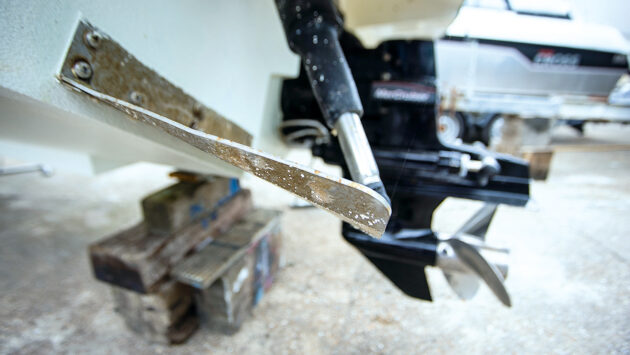
Photo: Richard Langdon
Trim tab down – The hydraulic ram on this traditional style trim tab is fully extended, deflecting the water down as it passes under it. This creates pressure or lift on the transom, forcing the bow down.
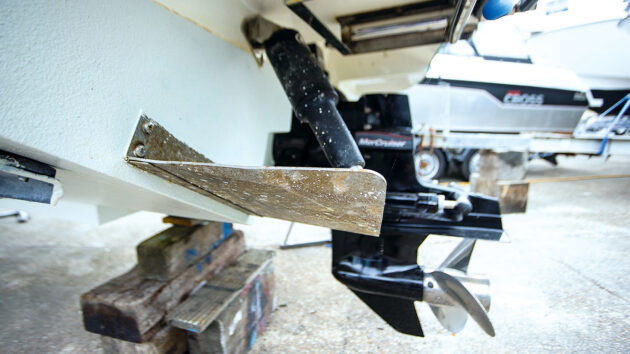
Photo: Richard Langdon
Trim tab up – This tab is fully up with the ram retracted. Now it’s not producing any lift, so the stern sits lower, keeping the bow high. Always leave tabs up and outdrive legs down after use to stop the rams getting fouled.
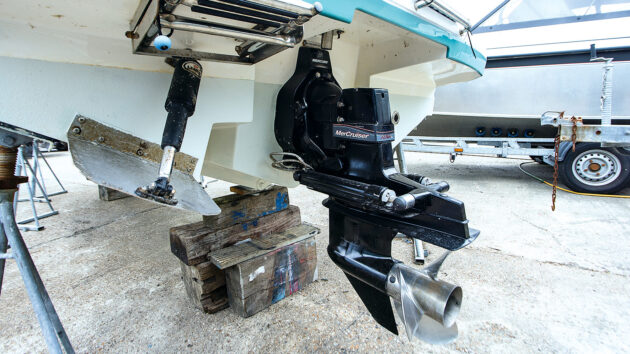
Photo: Richard Langdon
Single tab – This stepped hull boat runs very flat at speed. Trimming the outdrive leg in and out resolves any fore and aft trim, while a single tab on the port side offsets the torque of the engine prop.
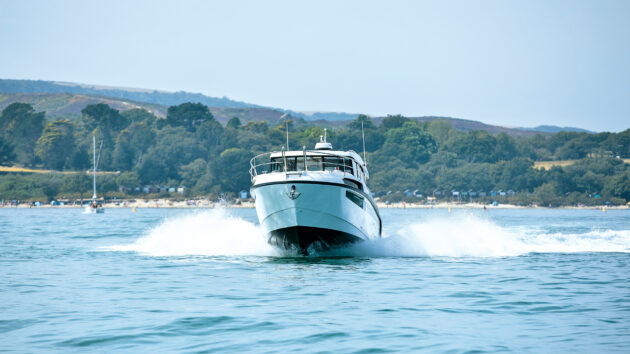
Photo: Richard Langdon
Trimmed too high – The stern is digging in and we can see a large area of bow unsupported. Dragging the stern increases fuel burn, making it slower to get on the plane and less stable in turns.
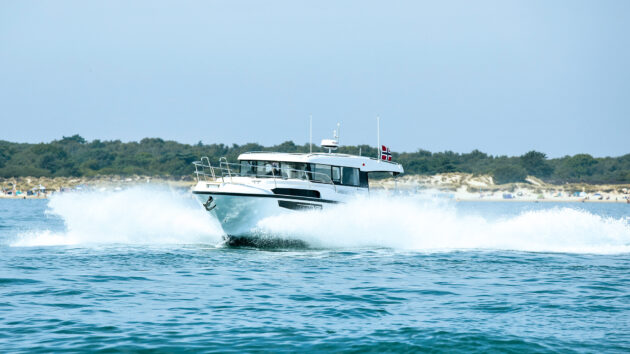
Photo: Richard Langdon
Trimmed too low – Too much tab down is causing the bow to dig in and create a spray. This is inefficient and makes it harder to hold a straight course. However, it can be useful to prevent slamming when rough.
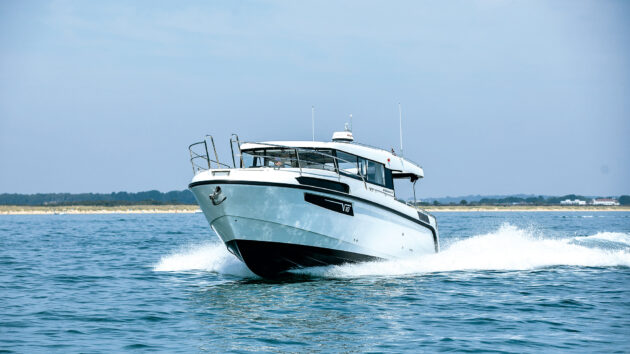
Photo: Richard Langdon
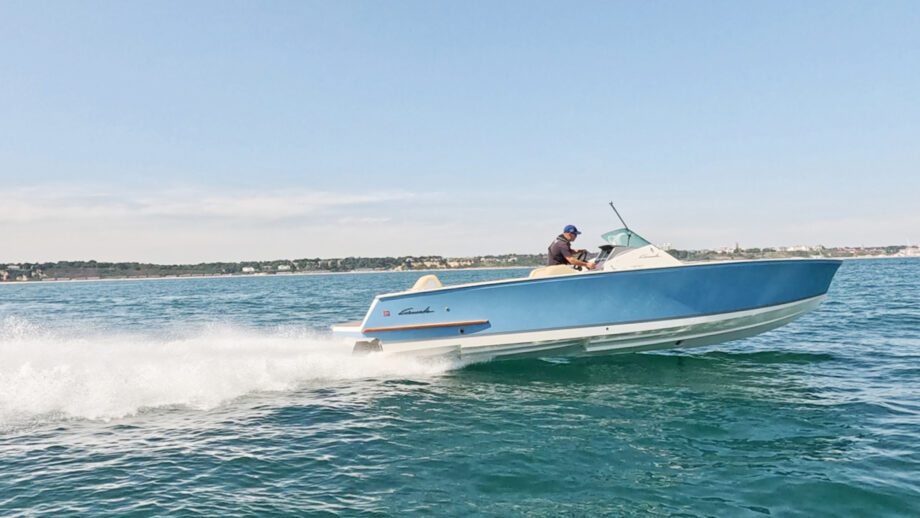
Trimmed just right – The bow is nicely clear of the water but without the stern being dug in too far. This is good for fuel efficiency and perfect for downwind or any direction on a pleasant day.
 If you enjoyed this….
 If you enjoyed this….
Motor Boat & Yachting is the world’s leading magazine for Motoryacht enthusiasts. Every month we have inspirational adventures and practical features to help you realise your sailing dreams, as well as tests and news of all the latest motorboats.
Plus you’ll get our quarterly Custom Yachting supplement where we share the last on offer in the superyacht world and at the luxury end of the market.
Build your knowledge with a subscription delivered to your door. See our latest offers and save at least 30% off the cover price.
Note: We may earn a commission when you buy through links on our site, at no extra cost to you. This doesn’t affect our editorial independence.